Kinematics Calculators — Velocity, Acceleration & Projectile Motion
Solve for velocity, acceleration, displacement, and time using the four kinematic equations. Includes projectile motion, free fall, and constant-acceleration problem solvers.
Kinematics Calculators
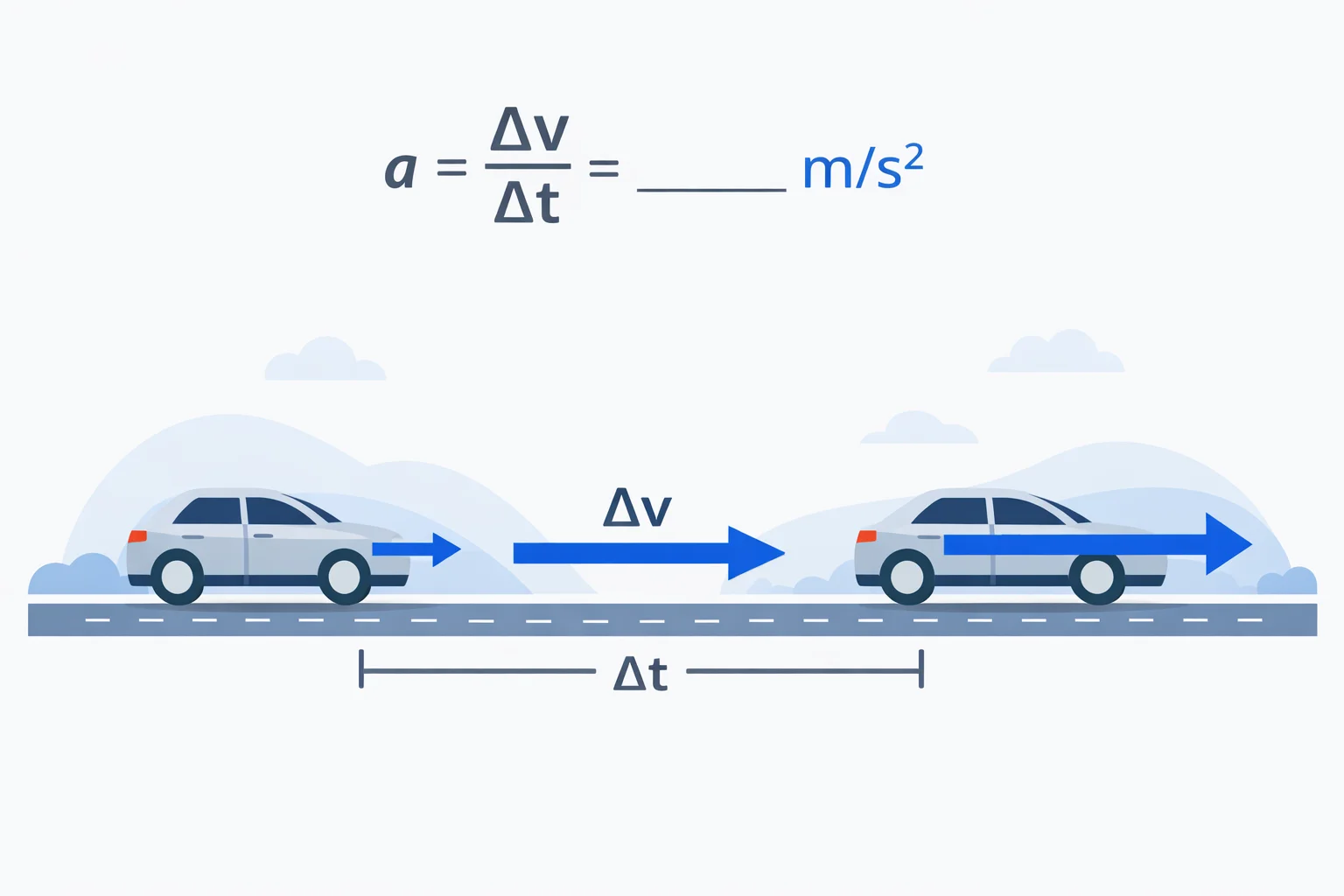
Acceleration Calculator
Acceleration calculator for a = Δv/Δt. Solve for acceleration, final velocity, starting velocity, or time — with g-force, distance, and every step shown.
Use Calculator
Average Speed Calculator
Average speed calculator for multi-segment trips. Add each leg by distance and time or speed, and get the true average in m/s, km/h, and mph — not the wrong simple average.
Use Calculator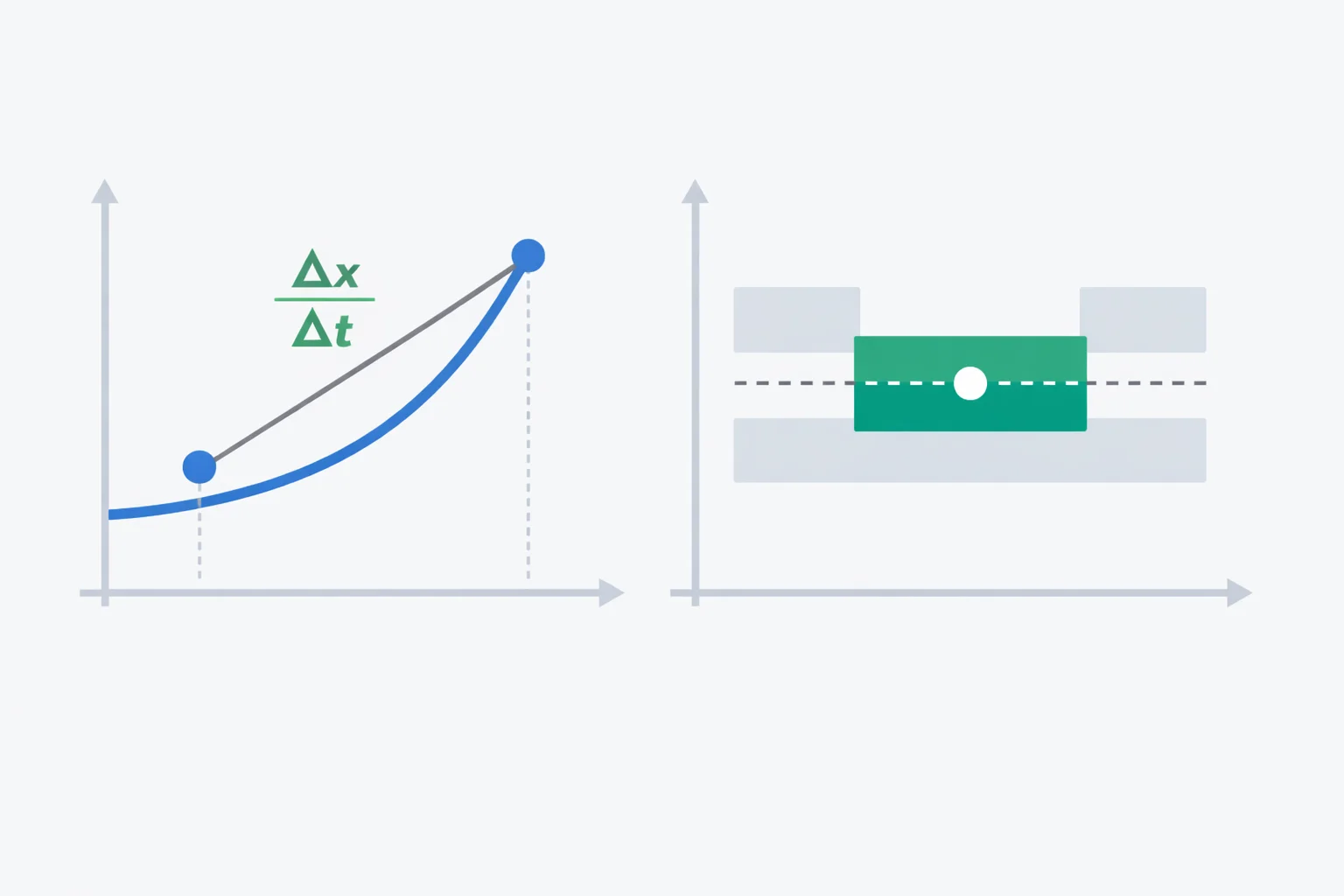
Average Velocity Calculator
Average velocity calculator using Δx/Δt from positions, or (vᵢ+v_f)/2 for constant acceleration. Get the answer in m/s, km/h, and mph with the steps shown.
Use Calculator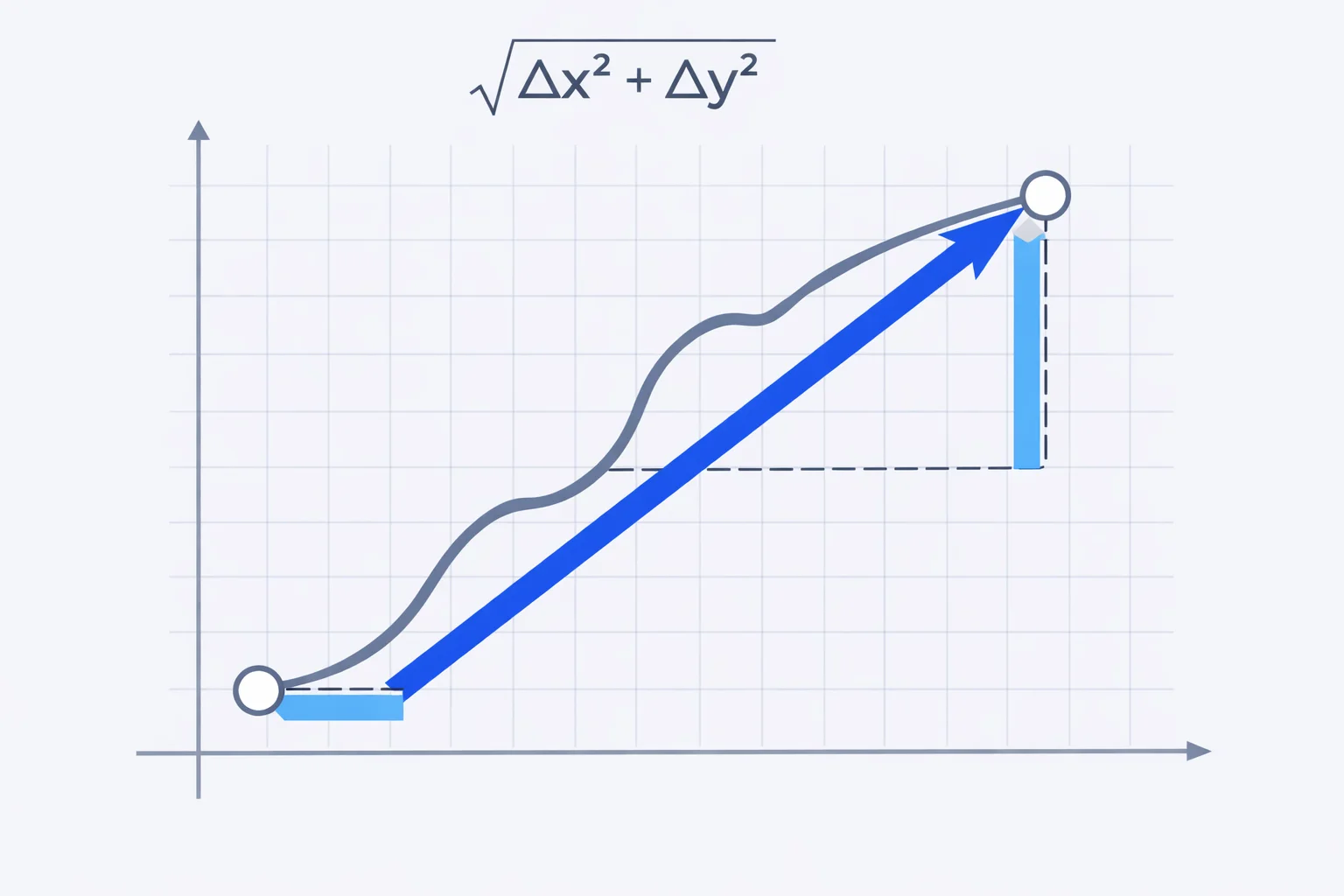
Displacement Calculator
Find displacement from two points or from motion (s = ut + ½at²). Get magnitude, direction, and the full step-by-step — and see how it differs from distance.
Use Calculator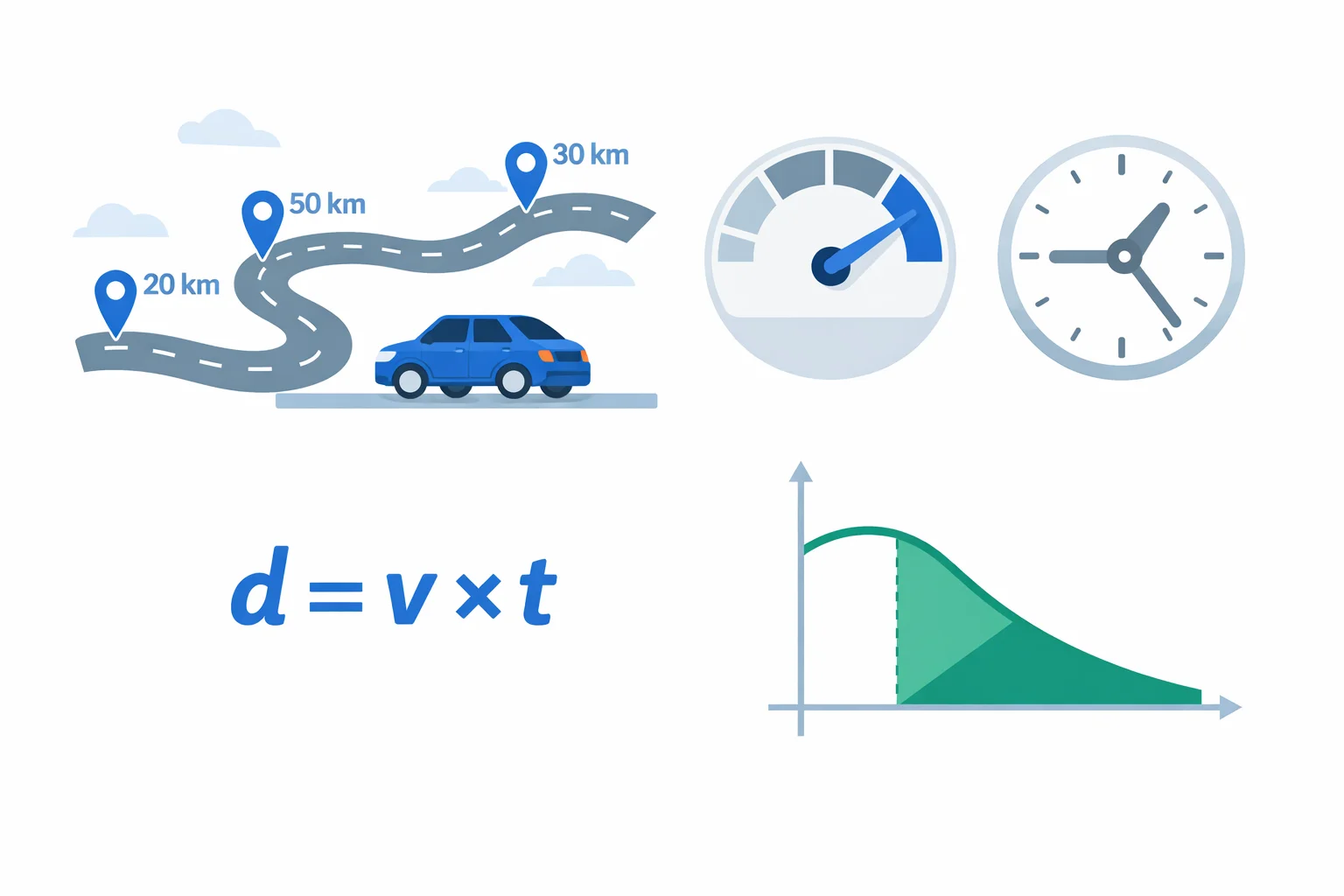
Distance Calculator
Distance calculator for d = v × t, accelerating motion (d = v₀t + ½at²), and multi-leg trips. Total distance traveled in m, km, miles, and feet with every step shown.
Use Calculator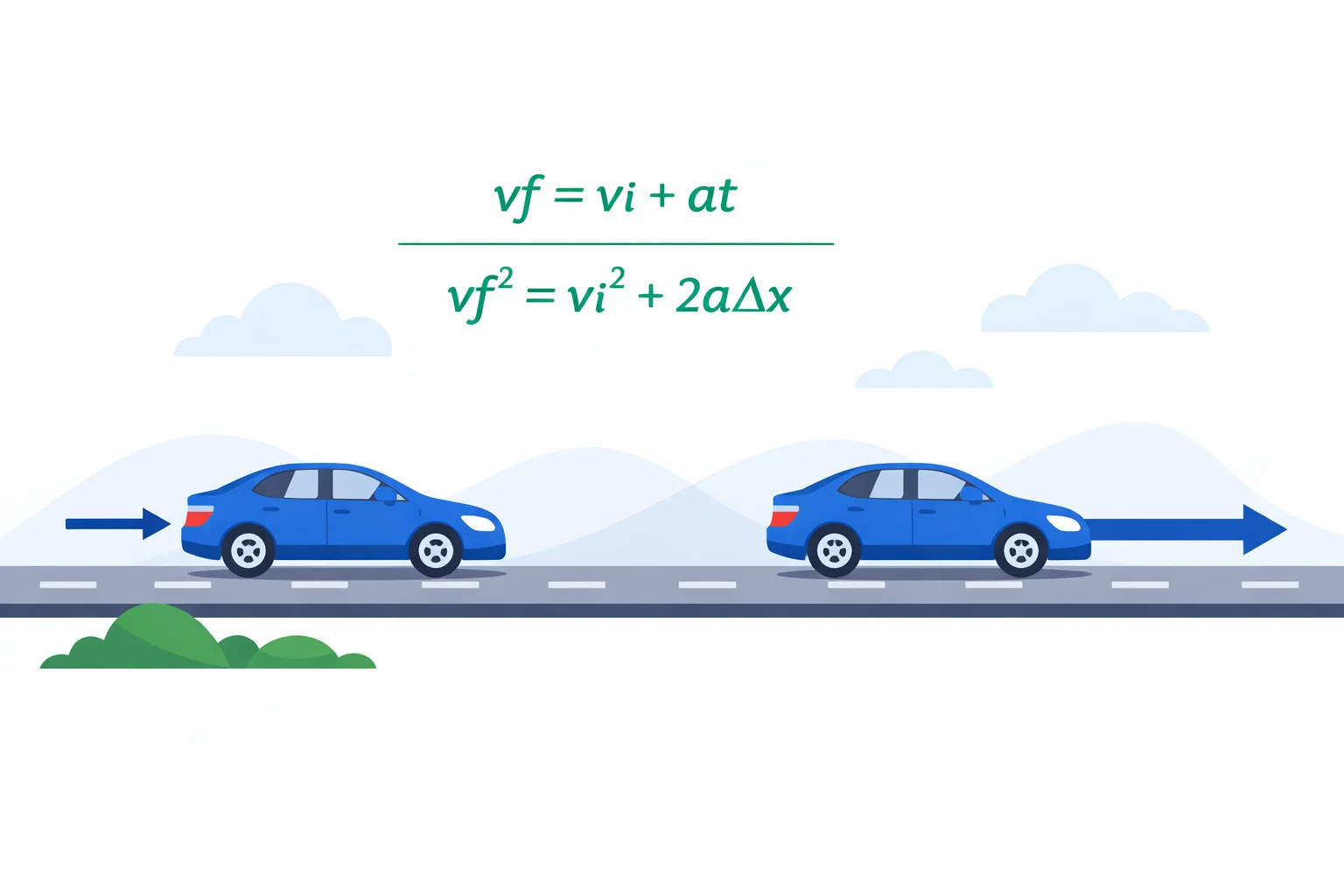
Final Velocity Calculator
Final velocity calculator that picks the right kinematic equation. Solve vf from initial velocity, acceleration, time, or displacement, with steps shown.
Use Calculator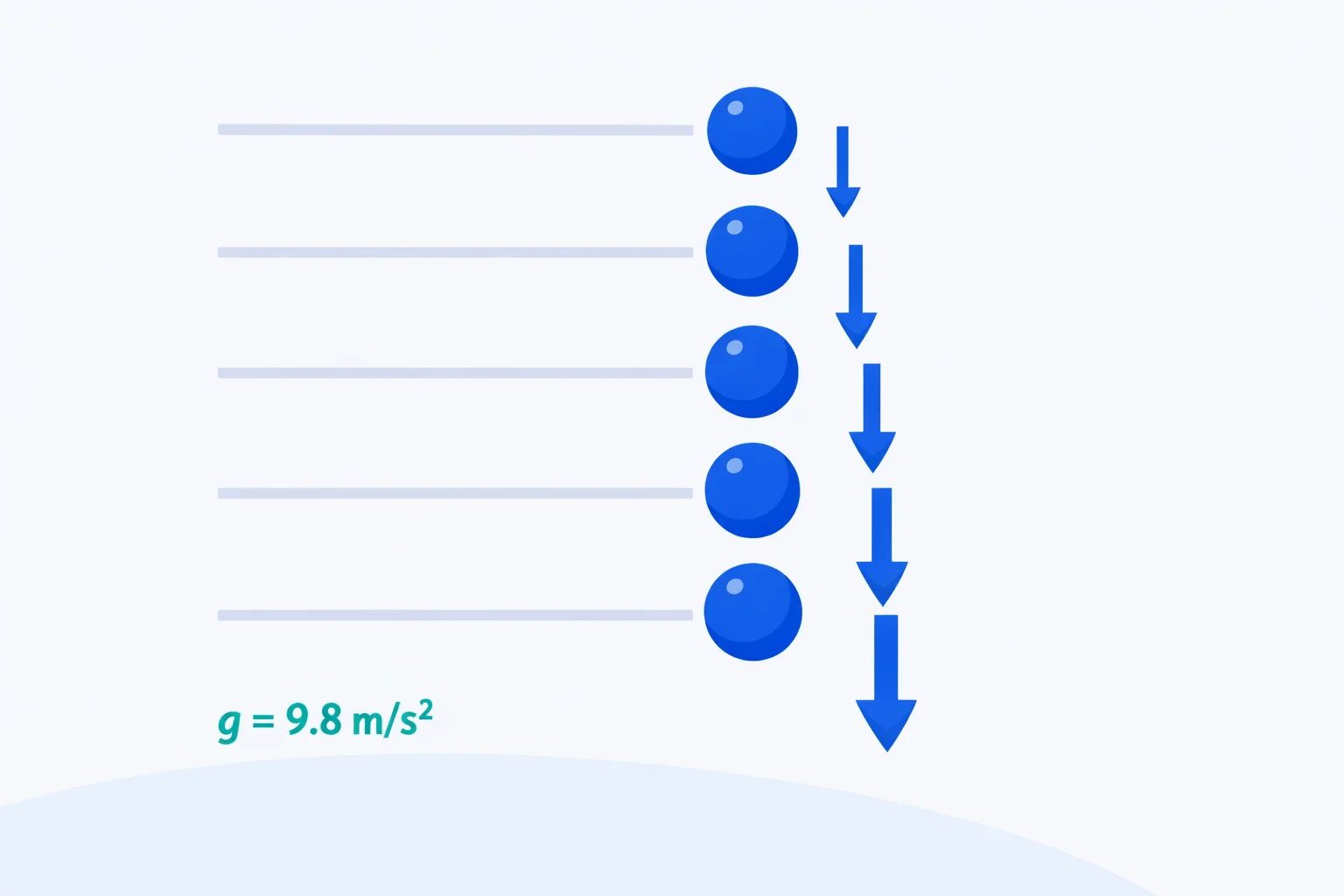
Free Fall Calculator
Calculate free fall time, velocity, and distance. Enter drop height, fall time, or impact speed and pick a planet's gravity to solve for the rest.
Use Calculator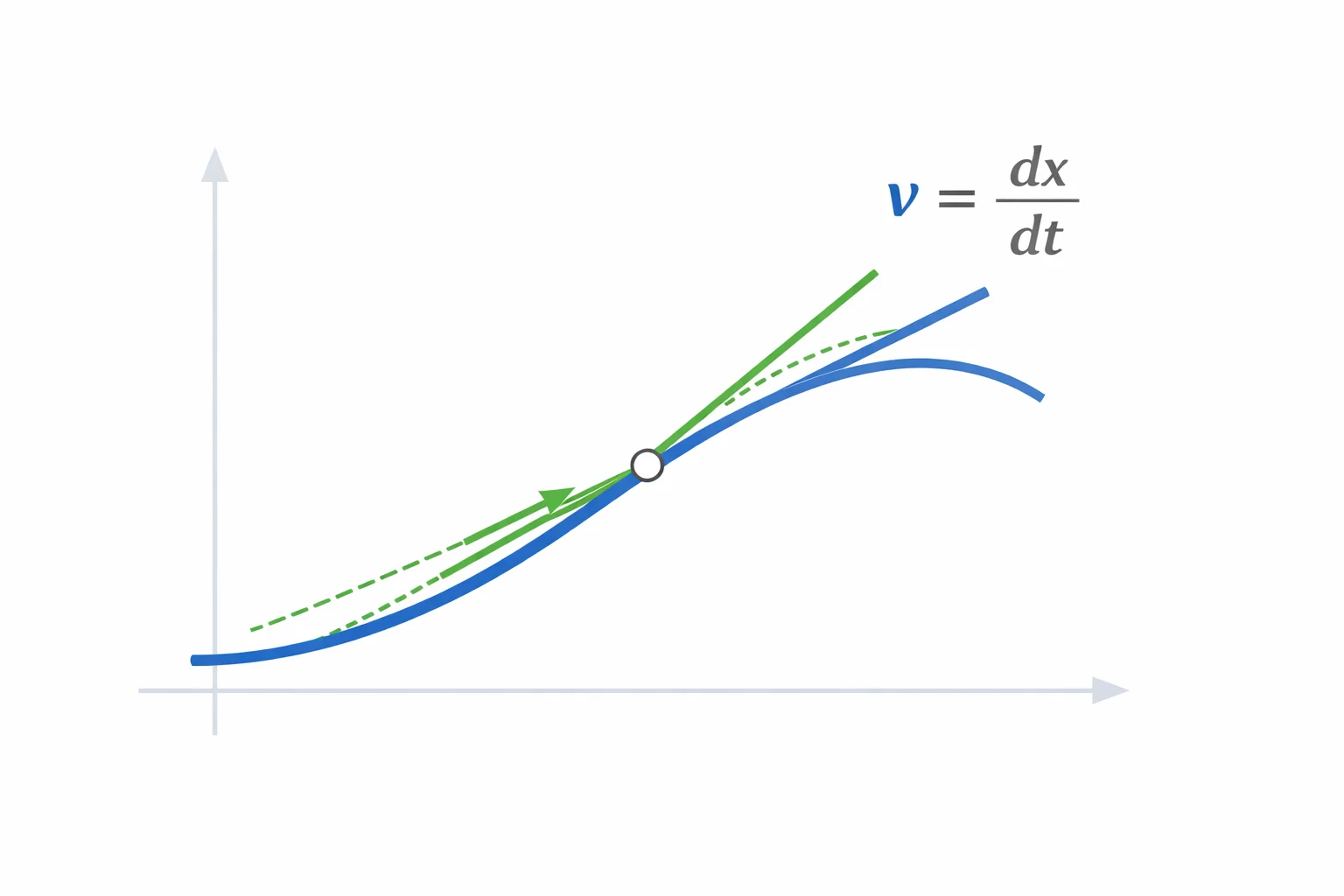
Instantaneous Velocity Calculator
Instantaneous velocity calculator: enter a position function x(t), pick a time, and get the exact velocity as the derivative dx/dt and the tangent-line slope.
Use Calculator
Kinematic Equations Calculator
Enter any 3 of the 5 SUVAT variables — s, u, v, a, t — and this kinematic equations calculator picks the right equation to solve the other two.
Use Calculator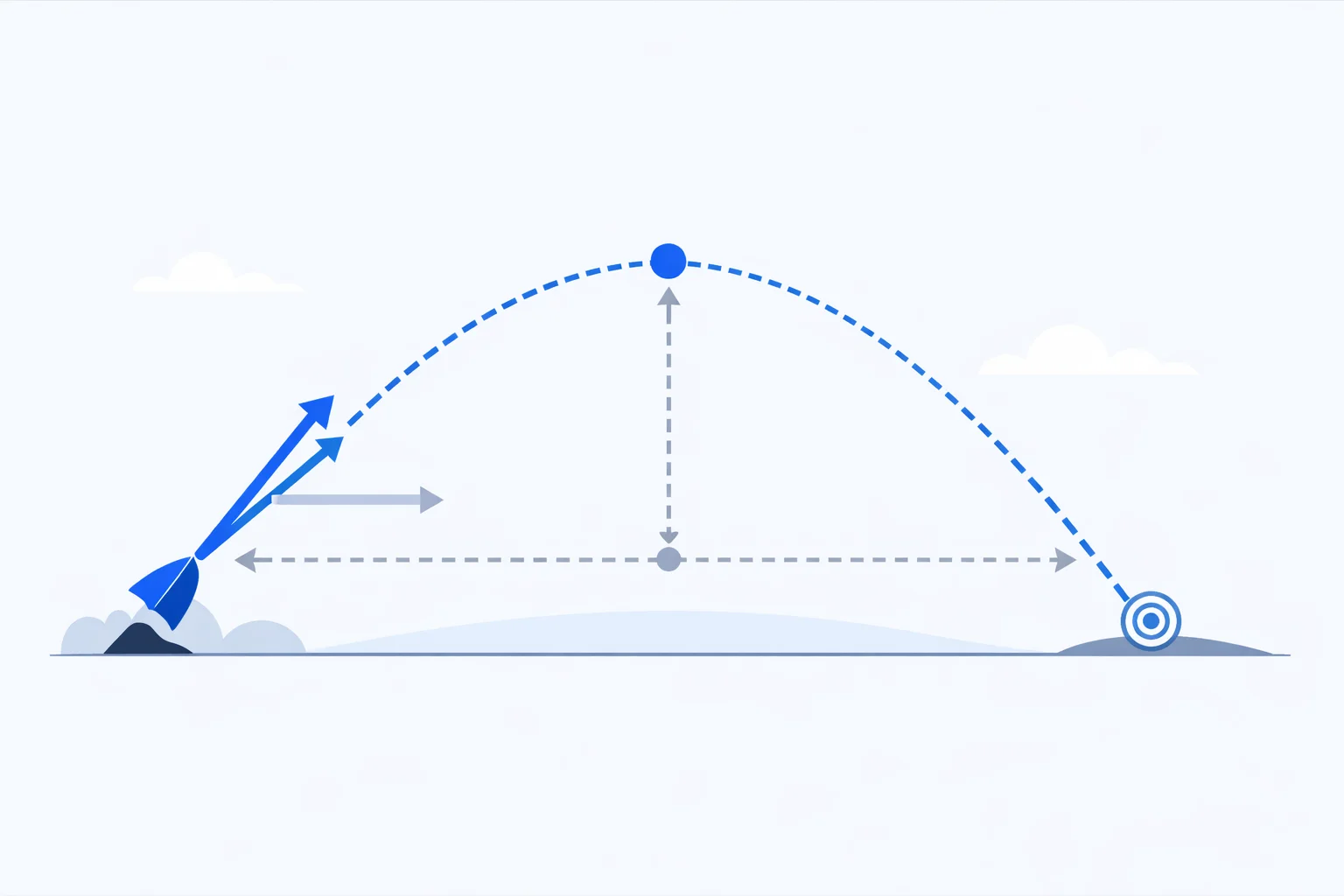
Projectile Motion Calculator
Projectile motion calculator with a live trajectory plot. Enter launch speed, angle, and height to find range, max height, and time of flight.
Use Calculator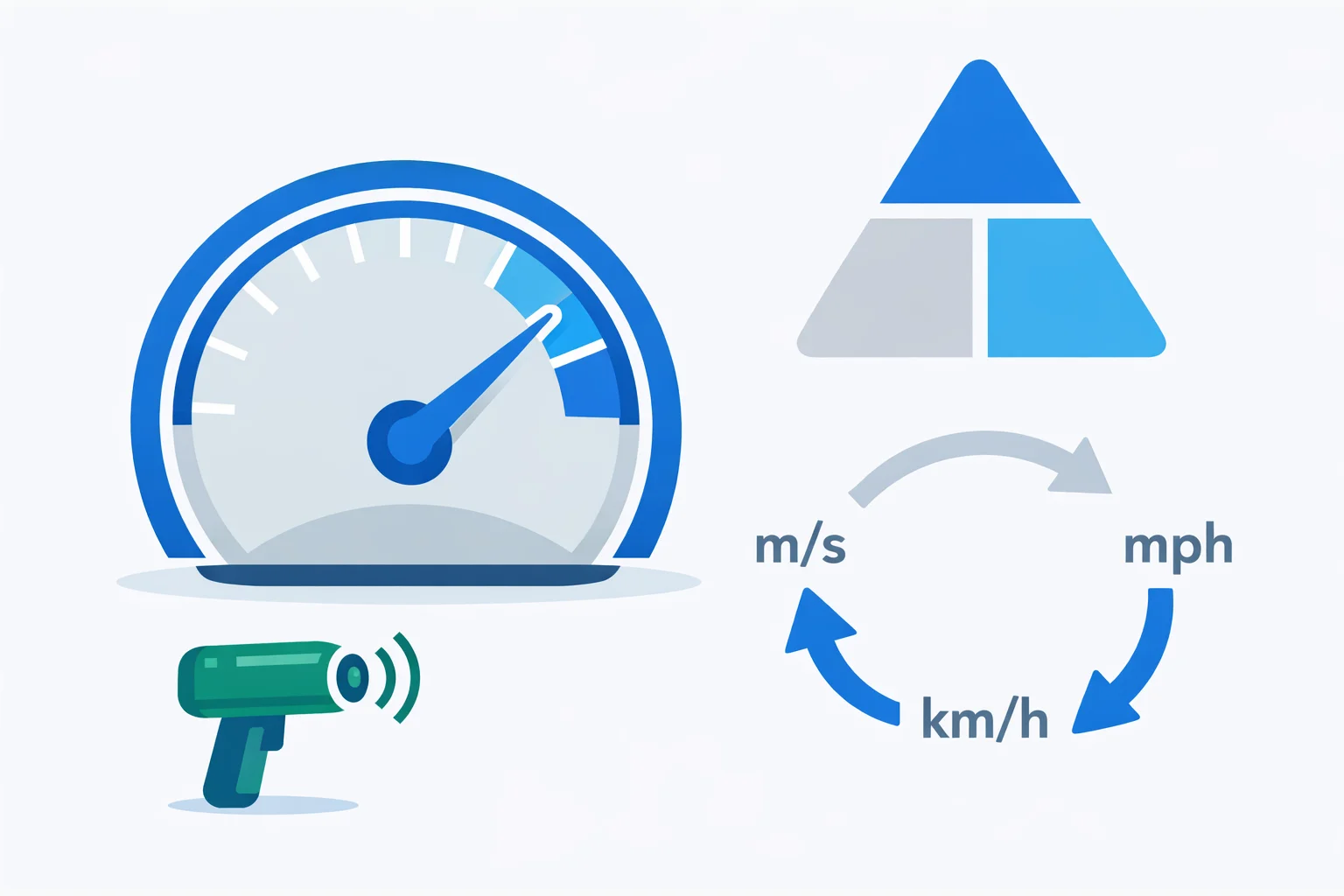
Speed Calculator
Speed calculator that solves for speed, distance, or time. Get results in m/s, km/h, mph, ft/s, and knots, with average vs instantaneous speed explained.
Use Calculator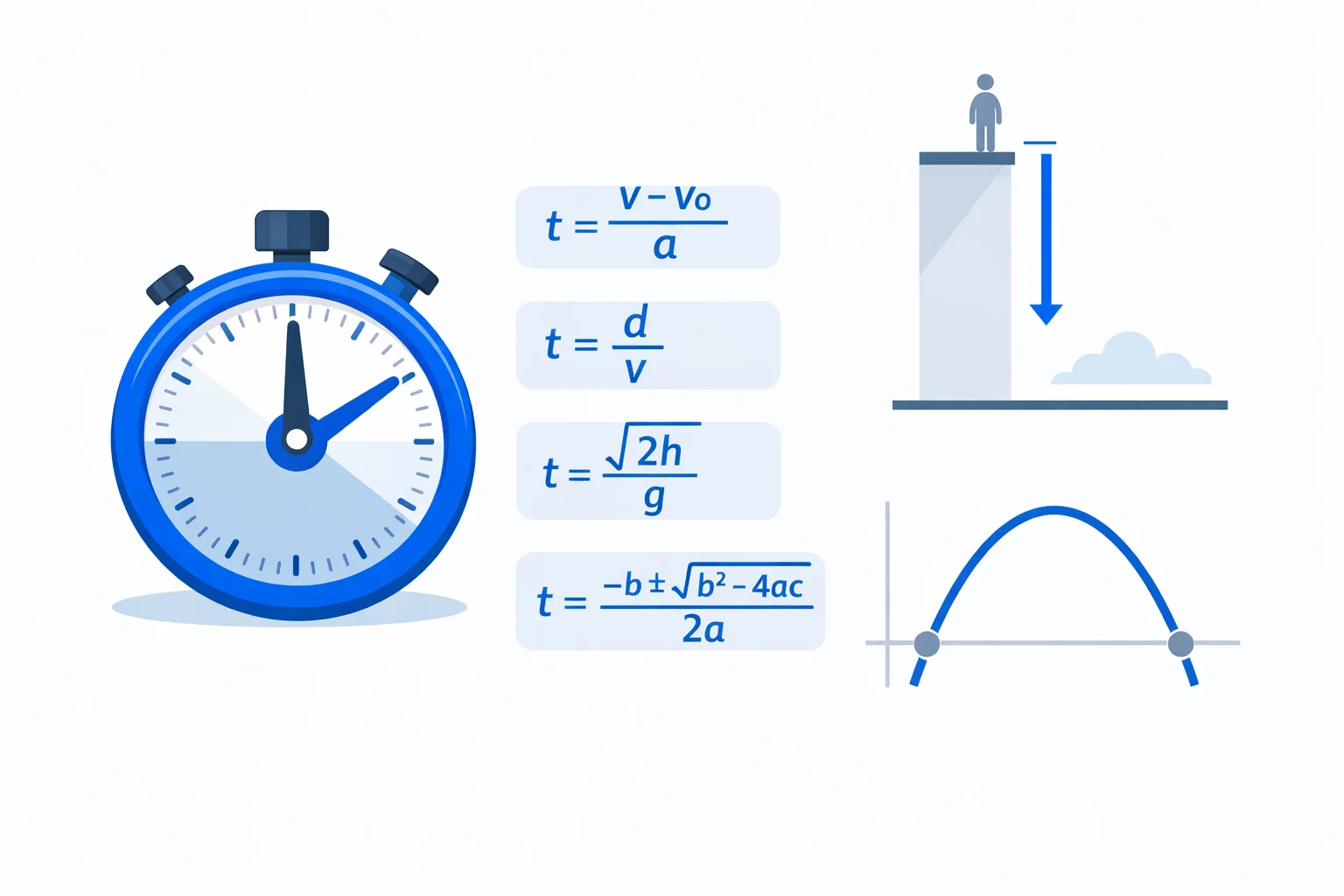
Time Calculator
Solve for time in physics. Find elapsed time from distance and speed, from a velocity change, or from displacement with constant acceleration (quadratic solver).
Use Calculator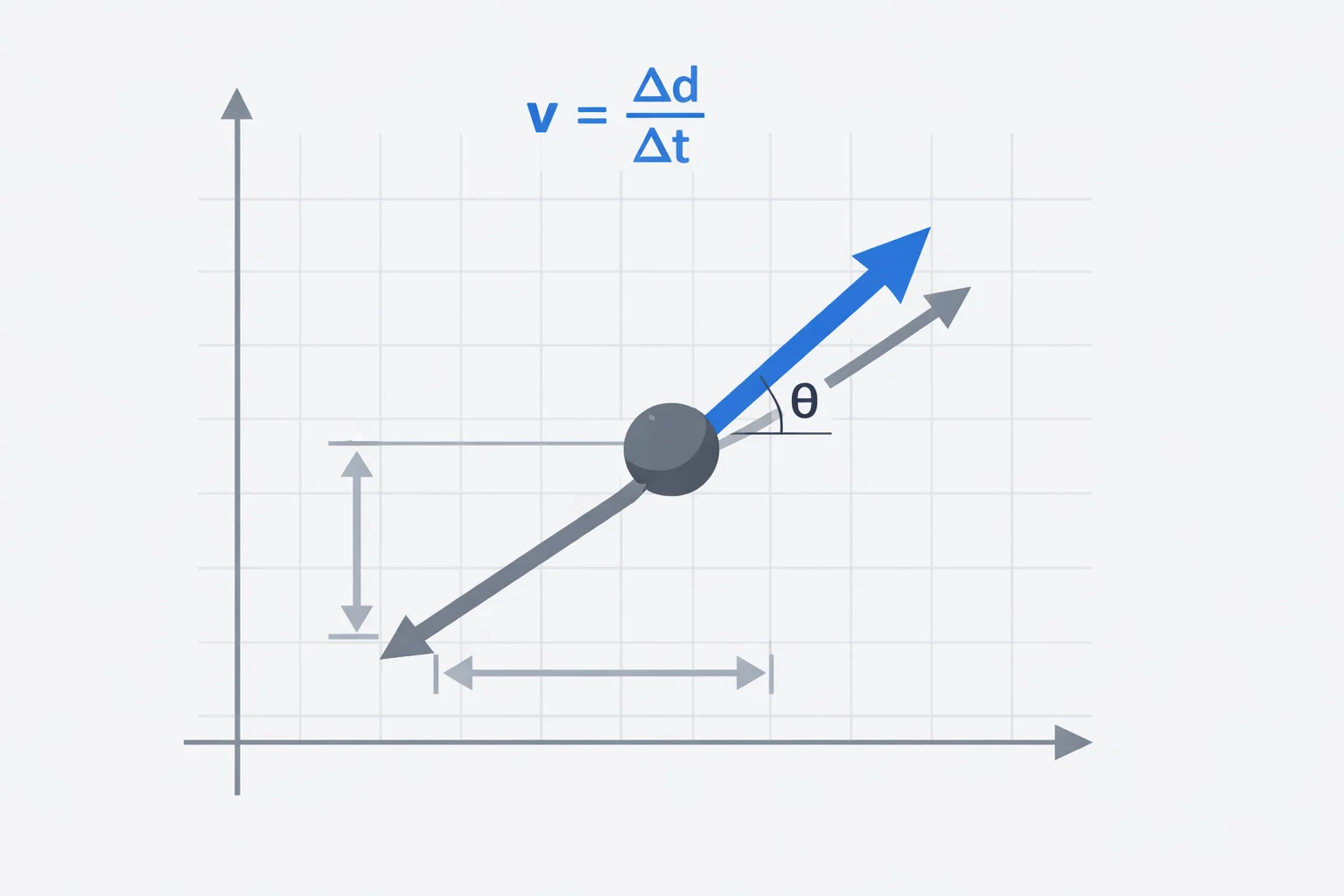
Velocity Calculator
Velocity calculator for v = displacement ÷ time. Get speed in m/s, km/h, and mph, plus 2D direction and components — with every step of the math shown.
Use CalculatorUnderstanding Kinematics in Physics
Kinematics is the branch of mechanics that describes how objects move without asking why they move. It focuses on four core quantities: position, velocity, acceleration, and time. The four kinematic equations let you solve any constant-acceleration problem by connecting these variables. For example, a car accelerating from rest at 3 m/s² for 5 seconds reaches a velocity of 15 m/s and covers 37.5 m of distance.
Projectile motion extends one-dimensional kinematics into two dimensions by treating horizontal and vertical motions independently. The horizontal component has zero acceleration (ignoring air resistance), while the vertical component accelerates at 9.8 m/s² downward. This separation makes even complex trajectory problems manageable when you apply the kinematic equations to each axis separately.
Kinematics provides the "what" of motion, while force and motion calculators explain the "why" through Newton's laws. Analyzing motion graphs is another essential skill for interpreting kinematics data — our graph & data analysis tools help you extract velocity from position-time graphs and acceleration from velocity-time graphs.