Economics Calculators — Physical Capital & Production Functions
Calculate physical capital per worker, marginal physical product, and production function outputs for AP and college economics problems.
Economics & Other Calculators
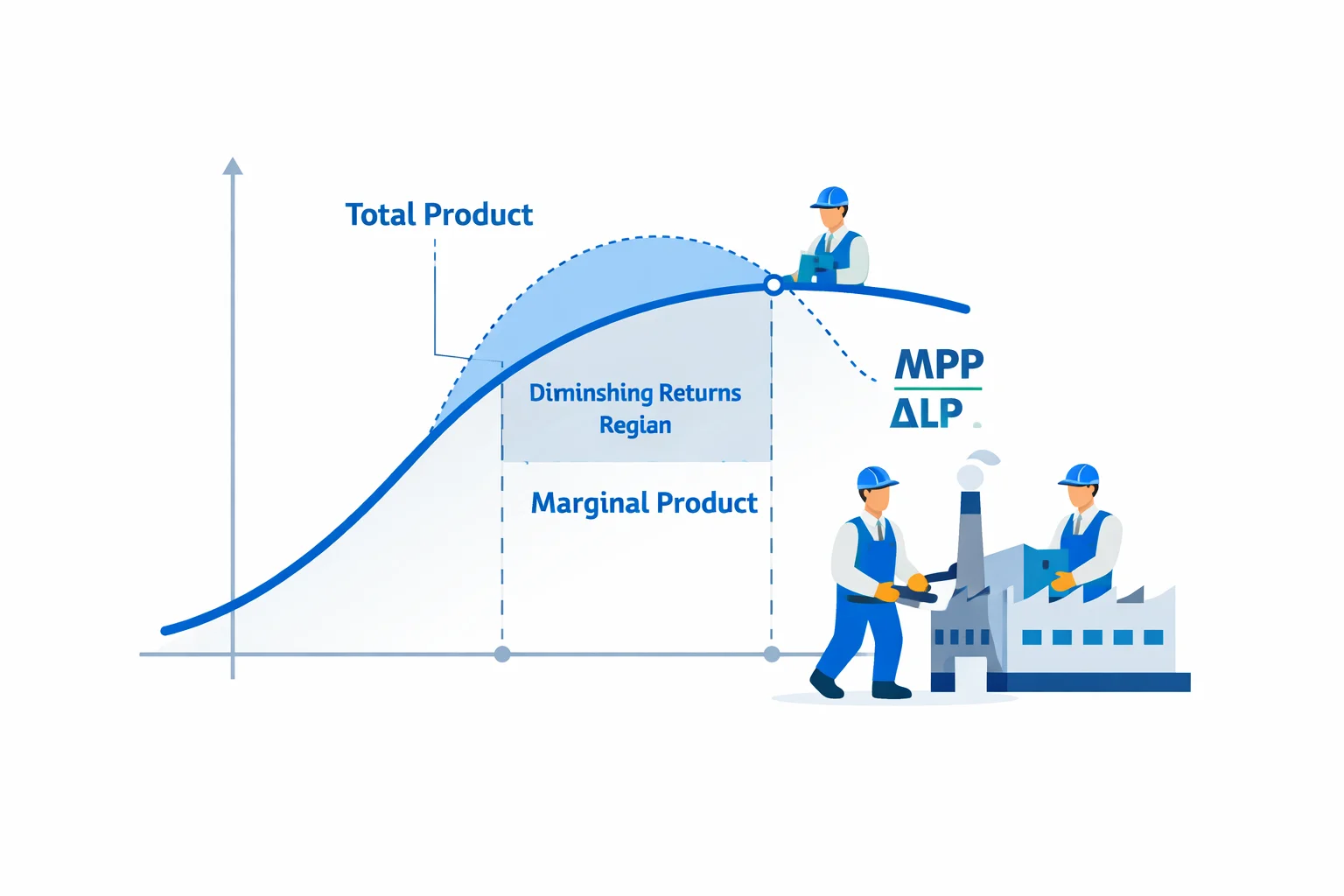
Marginal Physical Product Calculator
Calculate marginal physical product (MPP) of labor or capital. Enter production data to find MPP, average product, and identify diminishing returns instantly.
Use Calculator
Physical Capital Per Worker Calculator
Calculate physical capital per worker (K/L ratio) for economics. Analyze capital intensity, productivity, and the Solow growth model with real-time results.
Use CalculatorUnderstanding Physical Economics Concepts
Physical capital — the tangible tools, machines, and infrastructure used in production — is a cornerstone of economics. Capital per worker (K/L) is one of the strongest predictors of a nation's productivity and standard of living. Countries with more physical capital per worker produce more output per hour, which translates to higher wages. The United States has roughly $150,000 of capital per worker, while many developing economies have less than $10,000.
Production functions like Q = ALαKβ model how labor and capital combine to create output. The marginal physical product — the extra output from one more unit of input — follows the law of diminishing returns: each additional worker or machine adds less than the previous one. These concepts use the same mathematical tools as physics: rates of change, optimization, and graphical analysis of functional relationships.
Analyzing production data requires graph & data analysis skills — plotting output vs. input to identify diminishing returns, fitting curves to estimate production function parameters, and calculating slopes to find marginal products. The precision techniques from measurement & uncertainty analysis also apply when working with real-world economic data that contains sampling error and estimation uncertainty.