Energy, Work & Power Calculators — Solve KE, PE & Efficiency
Calculate kinetic energy (KE = ½mv²), potential energy, work, power, and efficiency. Solve conservation of energy and mechanical advantage problems step by step.
Energy, Work & Power Calculators

Conservation of Energy Calculator
Solve conservation of energy problems instantly. Calculate final velocity, height, or speed at any point using KE + PE with optional friction.
Use Calculator
Efficiency Calculator
Calculate energy efficiency as output over input percentage. Compare useful work done to total energy input for any machine, heat engine, or process.
Use Calculator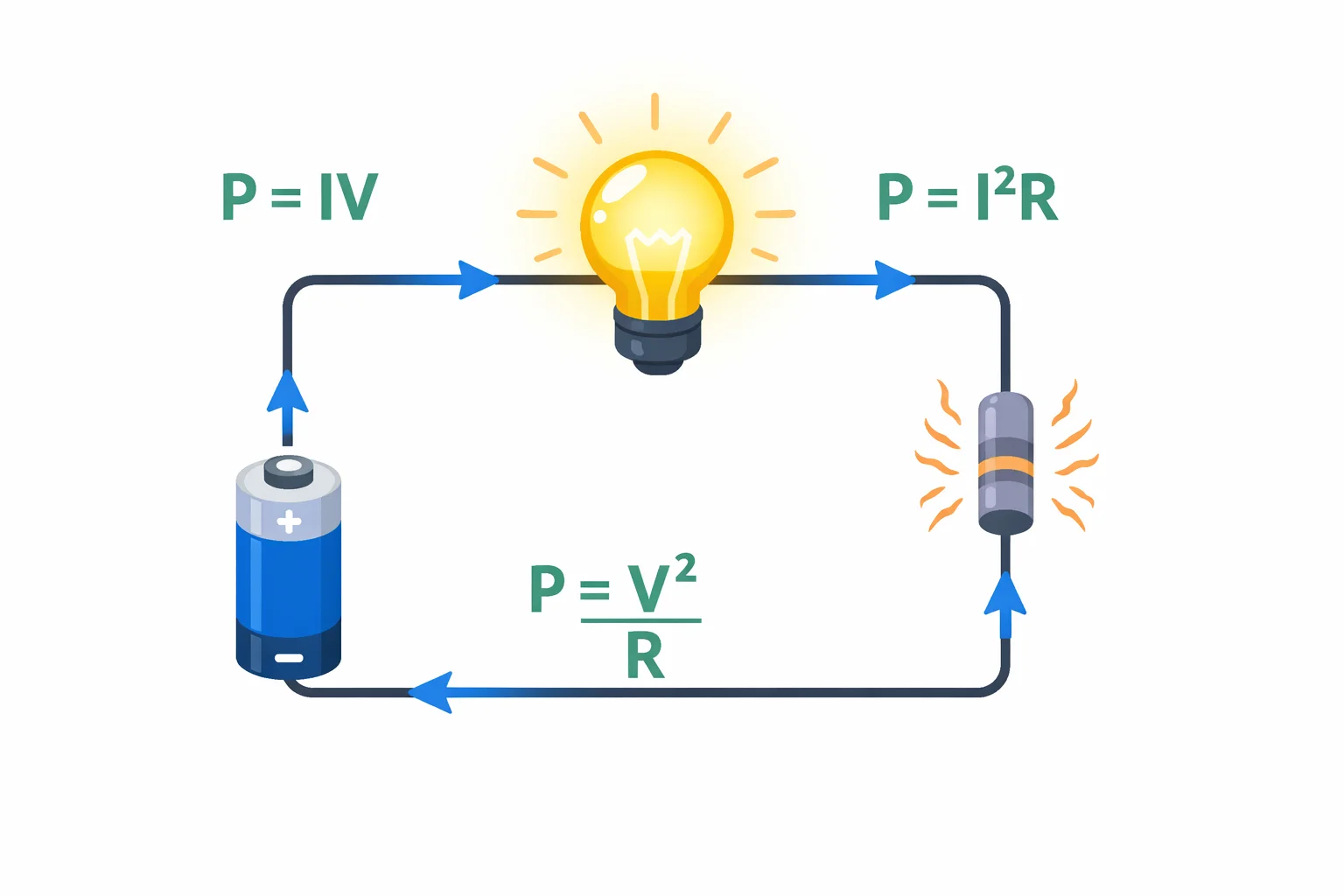
Electrical Power Calculator
Calculate electrical power using P = IV, P = I²R, or P = V²/R. Enter voltage, current, or resistance to find watts, amps, or volts instantly.
Use Calculator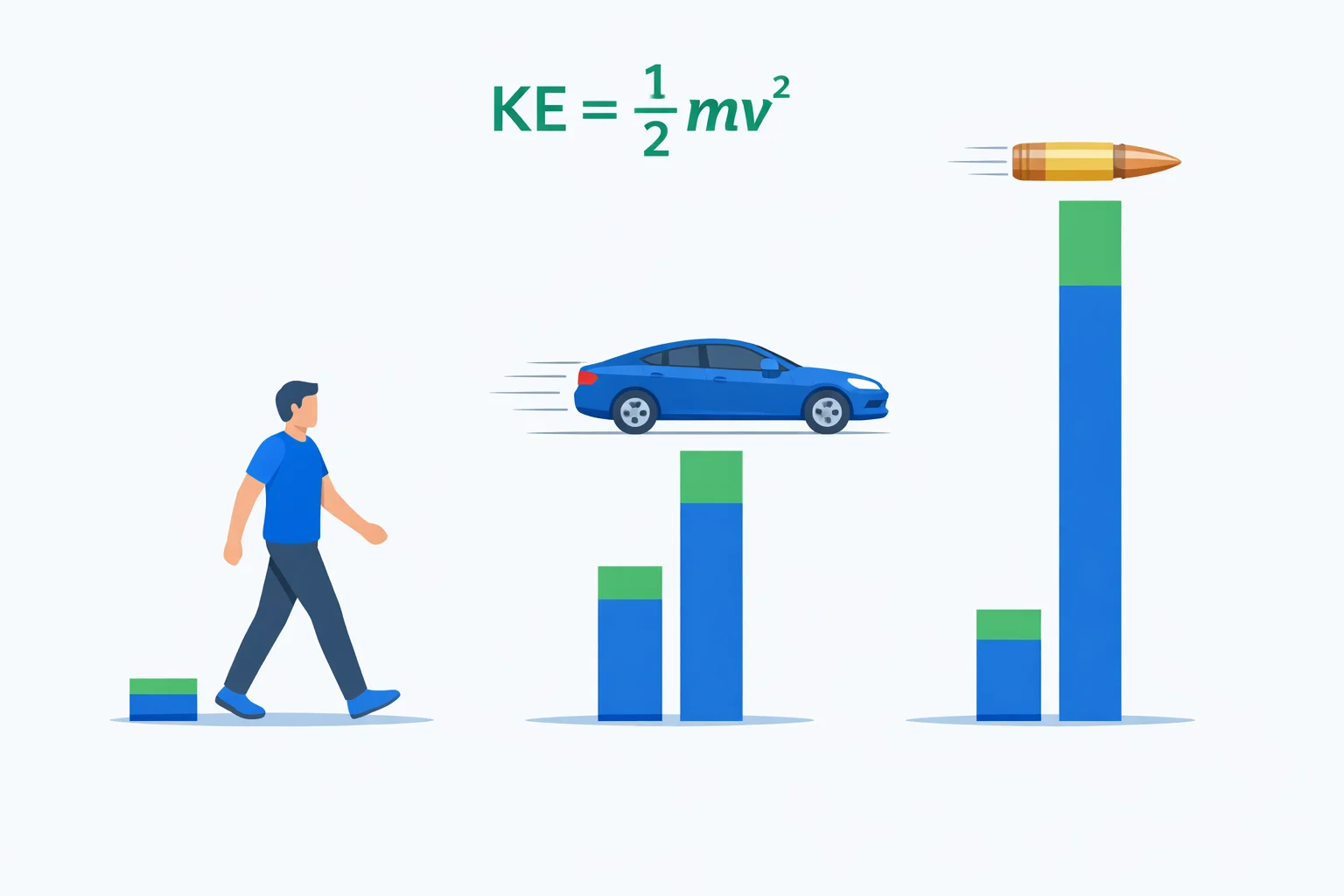
Kinetic Energy Calculator
Calculate kinetic energy with KE = ½mv². Enter mass and velocity to find energy in joules, or solve for mass or velocity from known kinetic energy.
Use Calculator
Mechanical Advantage Calculator
Calculate mechanical advantage for levers, pulleys, inclined planes, wheel & axle, wedges, and screws. Find ideal and actual MA from force or distance ratios.
Use Calculator
Net Work Calculator
Calculate net work done on an object by all forces combined. Apply the work-energy theorem to find total work and the resulting velocity change.
Use Calculator
Potential Energy Calculator
Calculate gravitational PE (mgh) and elastic PE (½kx²). Find stored energy from height, mass, spring constant, and displacement with step-by-step results.
Use Calculator
Power Calculator
Calculate mechanical power using P = W/t or P = Fv. Solve for power, work, time, or force in watts, kilowatts, and horsepower with unit conversions.
Use Calculator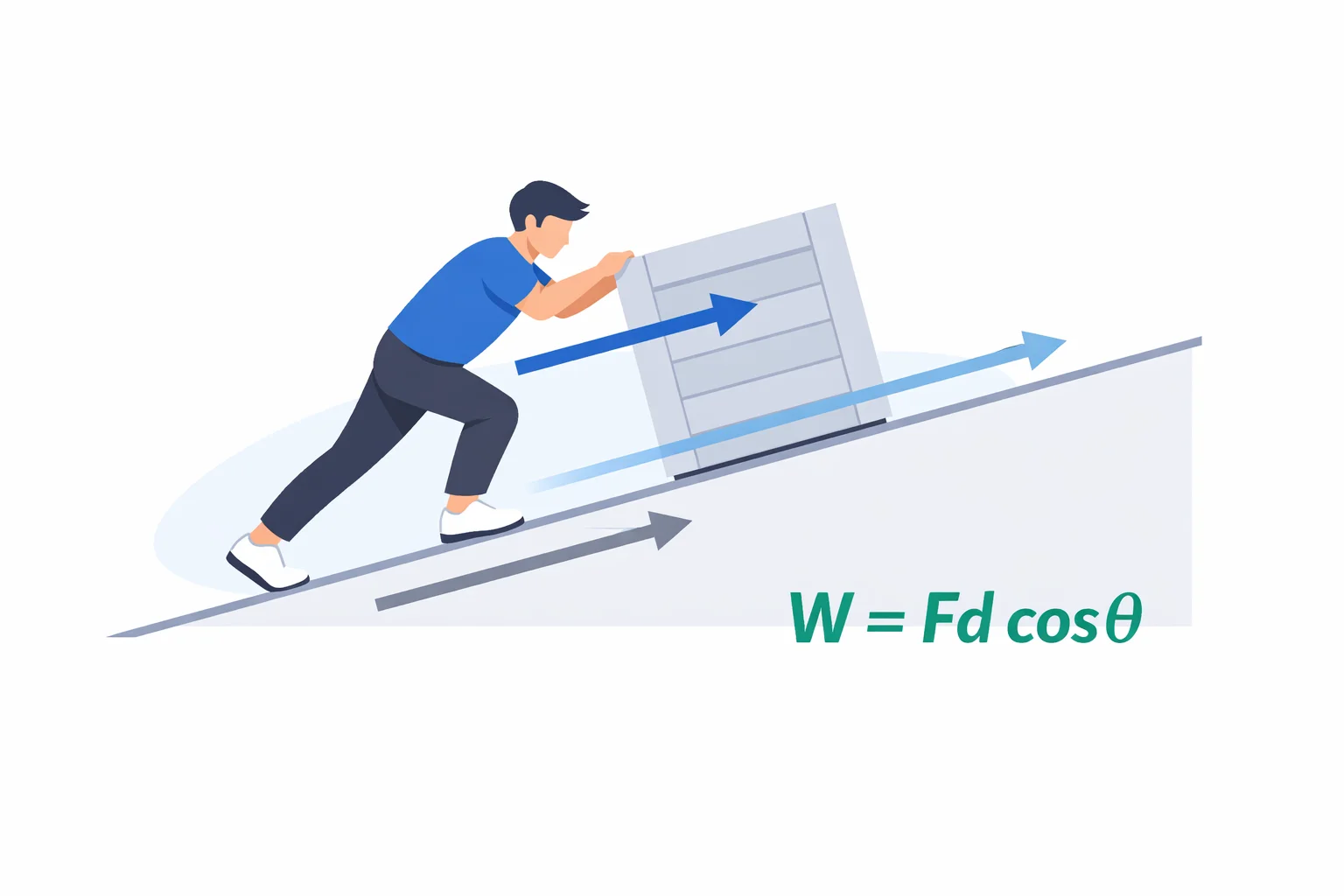
Work Calculator
Calculate work done by a force in physics using W = Fd cos(\u03B8). Enter force, distance, and angle for instant results with step-by-step explanations.
Use CalculatorUnderstanding Energy, Work & Power
Work, energy, and power form one of the most practical frameworks in physics. Work is done when a force causes displacement: W = Fd cos(θ). A 200 N force pulling a sled 50 m at a 30° angle does W = 200 × 50 × cos(30°) = 8,660 J of work. This energy transfer changes the object's kinetic energy, potential energy, or both, depending on the situation.
Conservation of energy is one of the most powerful problem-solving tools in physics. Instead of tracking forces and accelerations through complex paths, you can simply equate the total energy at two points: KE_1 + PE_1 = KE_2 + PE_2 (when no energy is lost to friction). A 0.5 kg ball dropped from 20 m has a speed of v = sqrt(2gh) = sqrt(2 × 9.8 × 20) = 19.8 m/s at the ground — solved in one step without kinematics.
Energy concepts build directly on force and motion principles, since work is defined through force and displacement. They also connect forward to momentum and impulse, where collisions can be analyzed using both conservation of momentum and conservation of kinetic energy (in elastic collisions).