Measurement & Uncertainty Calculators — Error Analysis & Sig Figs
Calculate percent error, uncertainty propagation, significant figures, and standard deviation for physics lab reports and experimental data analysis.
Measurement & Uncertainty Calculators
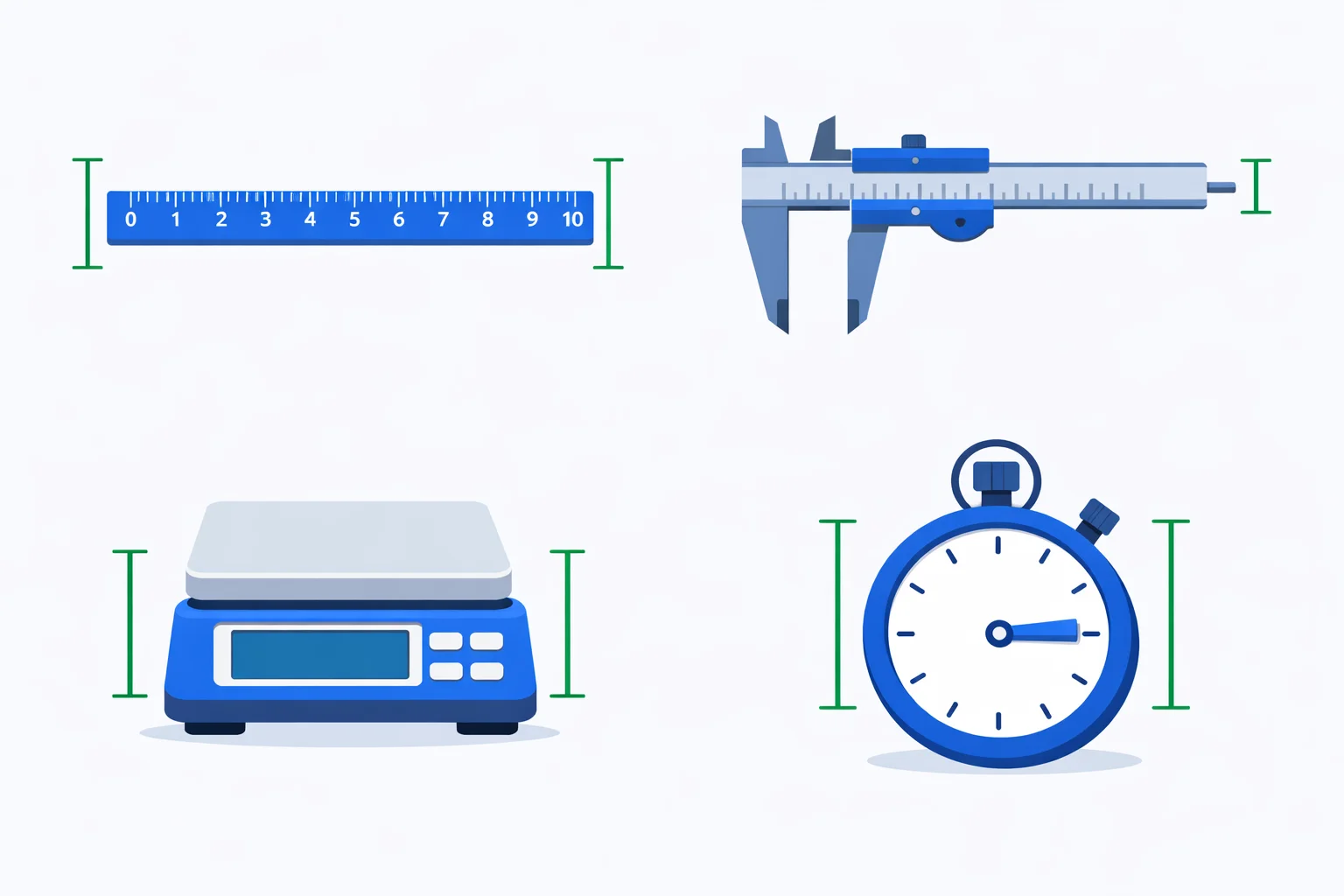
Absolute Uncertainty Calculator
Find the absolute uncertainty (±) of a measurement in its own units — from an instrument's scale, from repeated readings, or by adding and subtracting quantities.
Use Calculator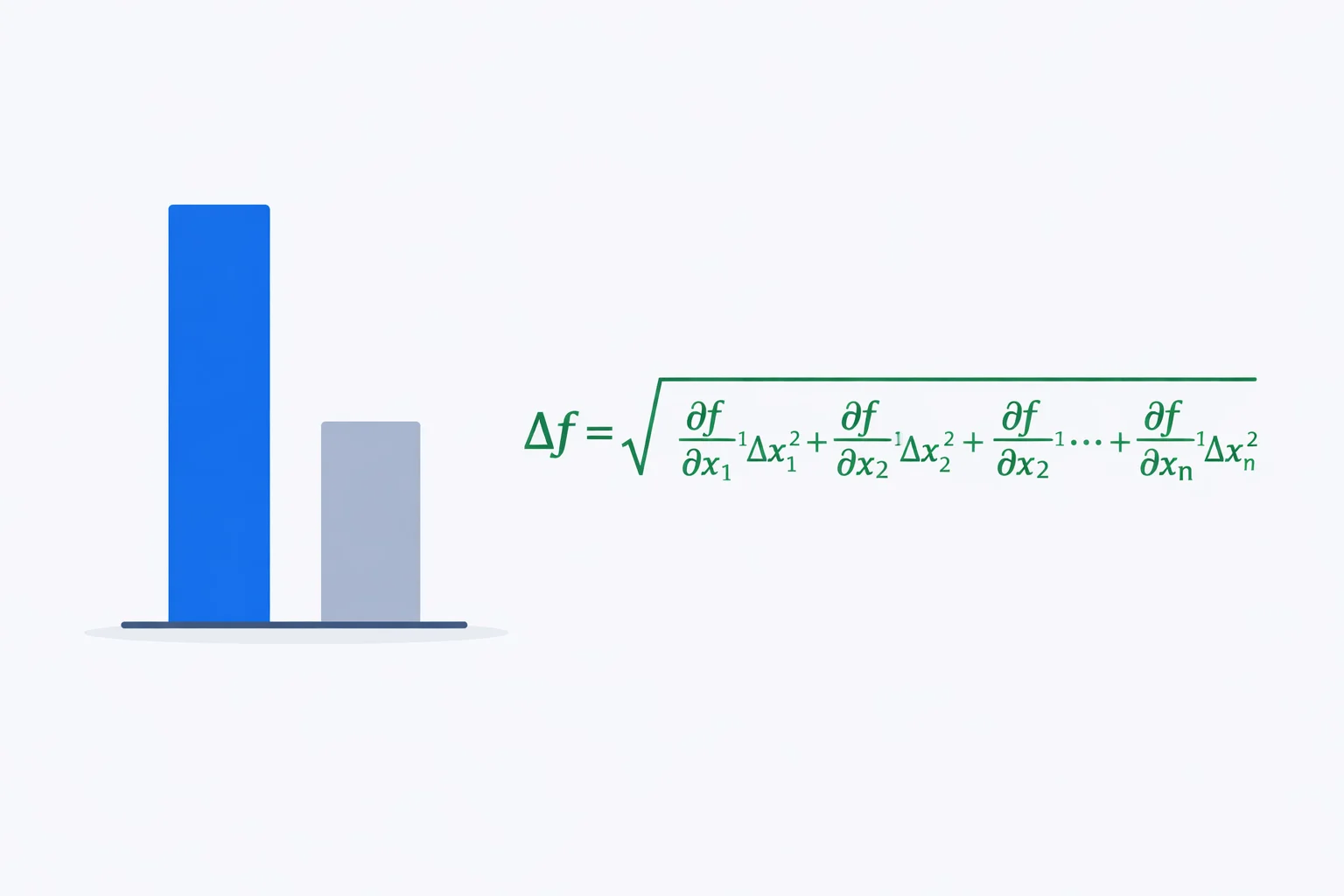
Error Propagation Calculator
Propagate uncertainty through sums, products and powers using the maximum-error and quadrature methods, and see which measurement dominates the result.
Use Calculator
Percent Error Calculator
Find percent error between your experimental result and the accepted value, with a built-in library of physics constants and a pass/fail tolerance check.
Use Calculator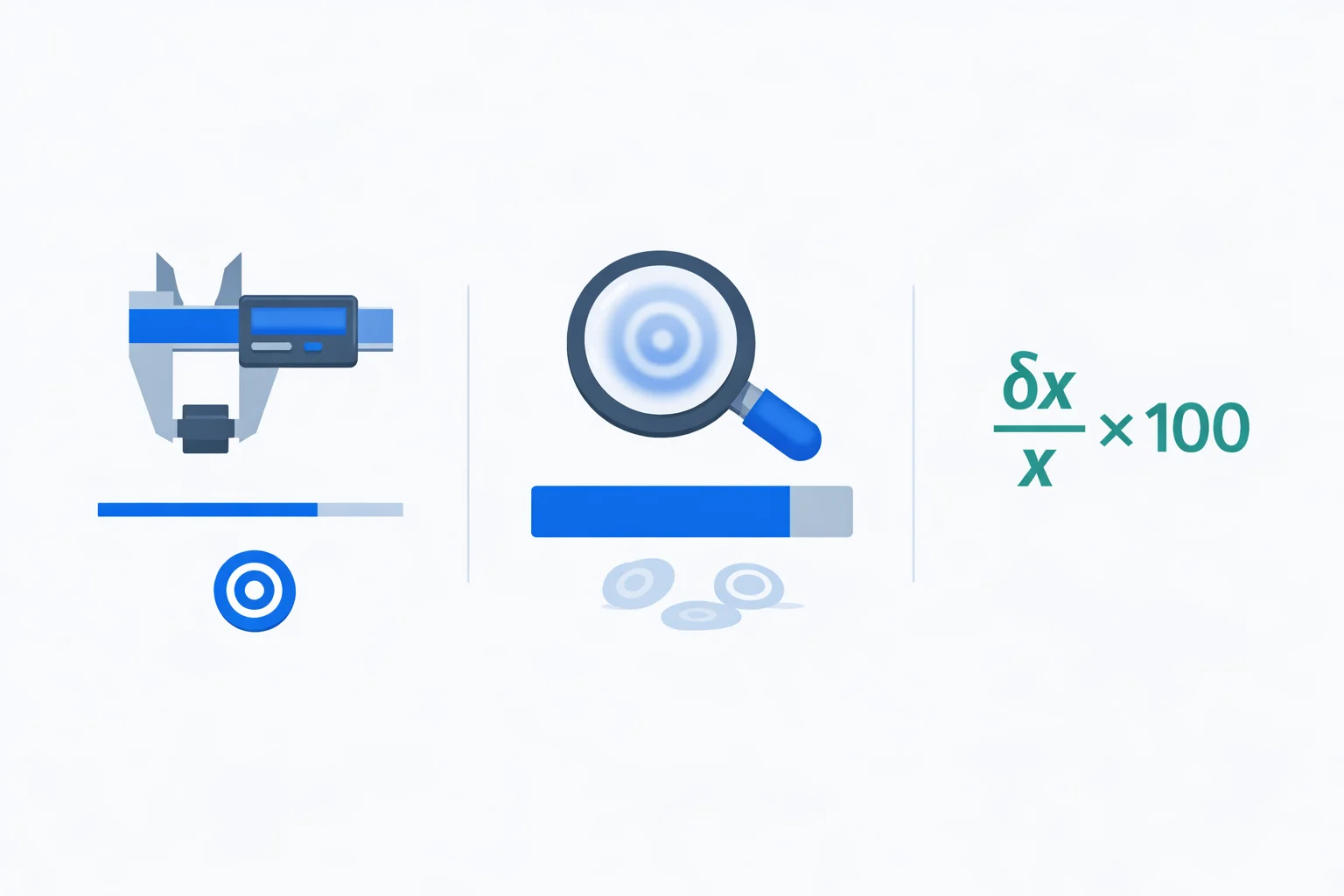
Percent Uncertainty Calculator
Calculate percent uncertainty from a reading and its error, from repeated trials, or combined across a whole formula. Built for physics lab reports.
Use Calculator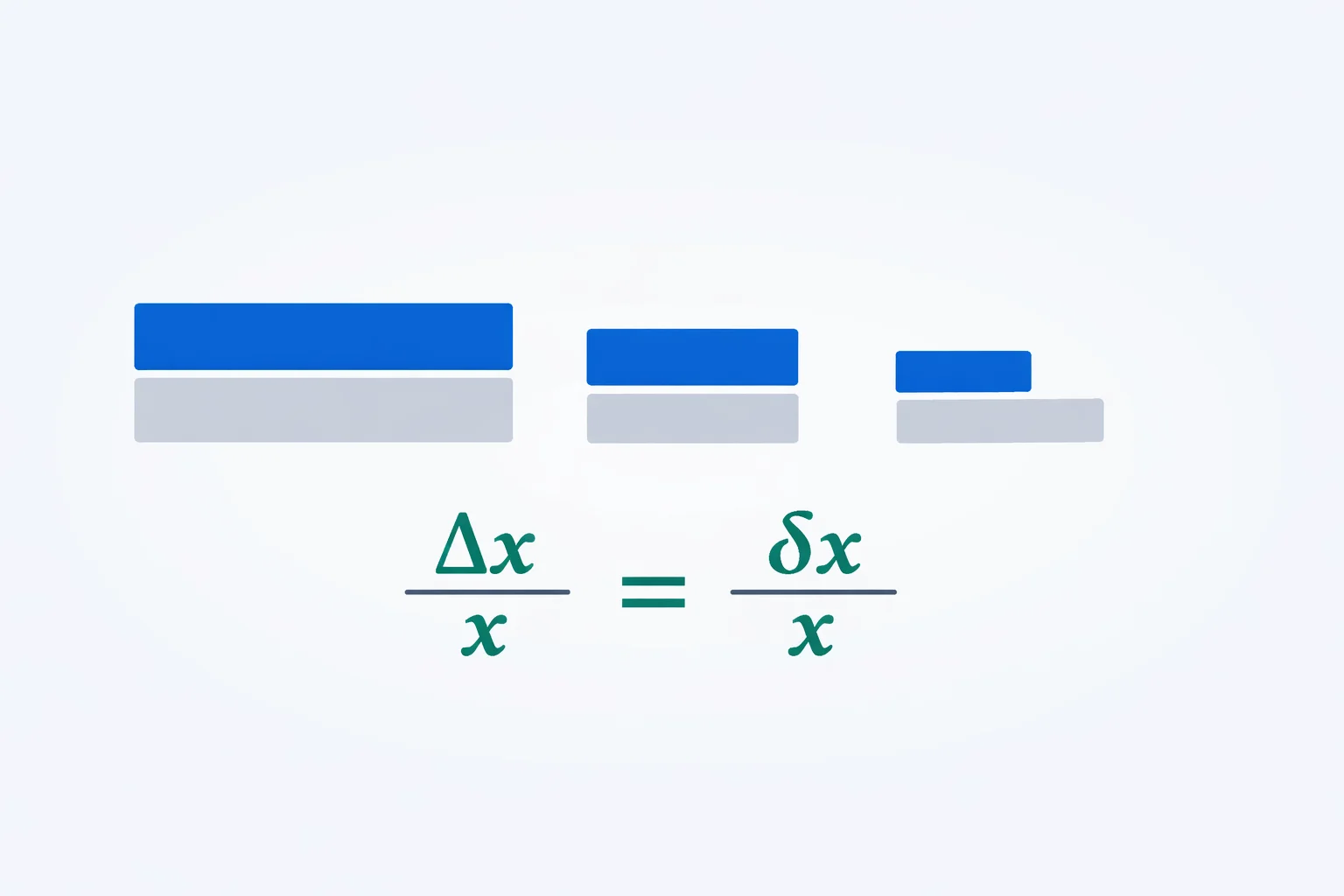
Relative Uncertainty Calculator
Find relative (fractional) uncertainty as δx/x, then rank the precision of measurements in different units. Shows the result as a decimal, 1-in-N, ppm, and percent.
Use Calculator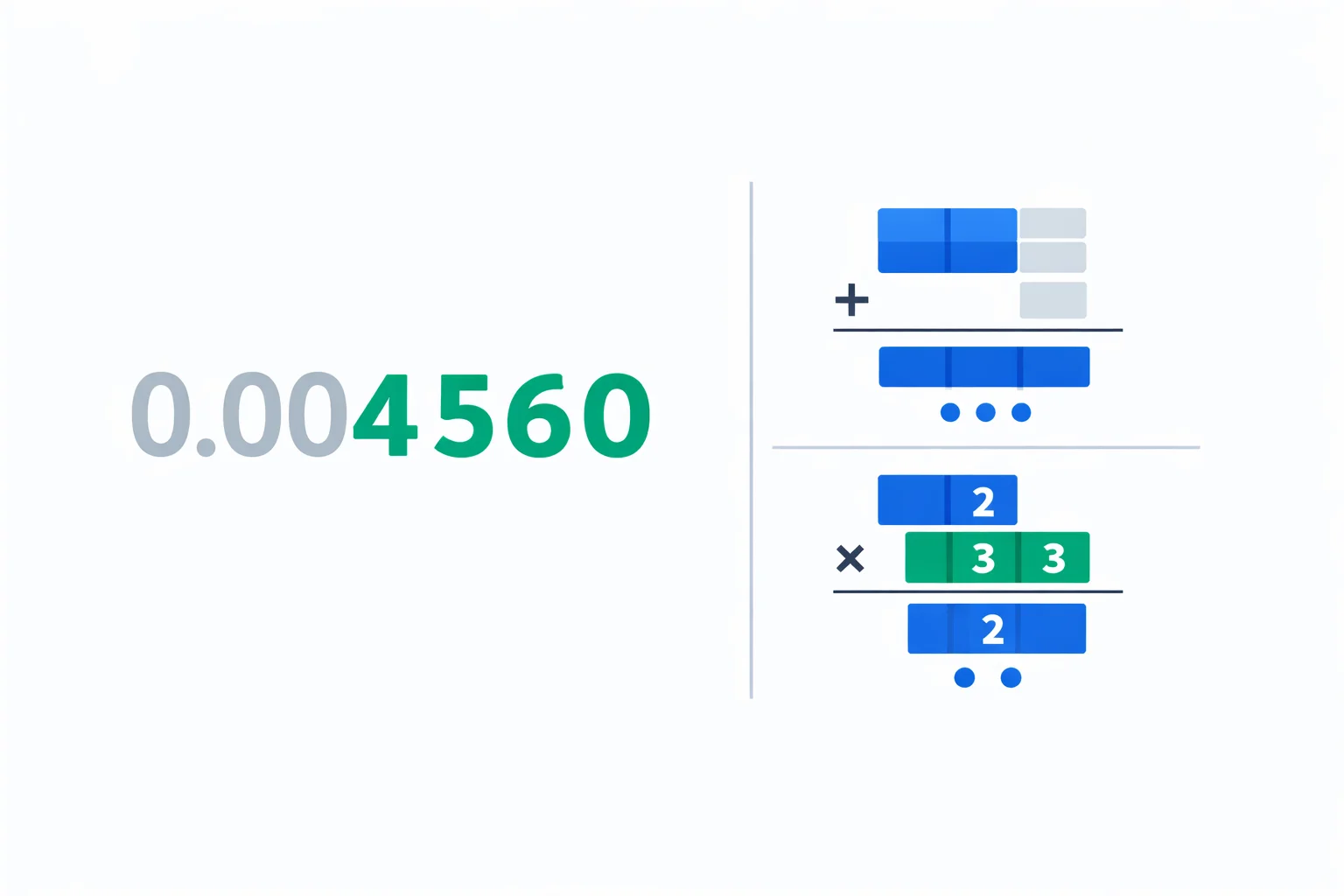
Significant Figures Calculator
Count and round to the correct number of significant figures. Apply sig fig rules for addition, multiplication, and scientific notation in seconds.
Use Calculator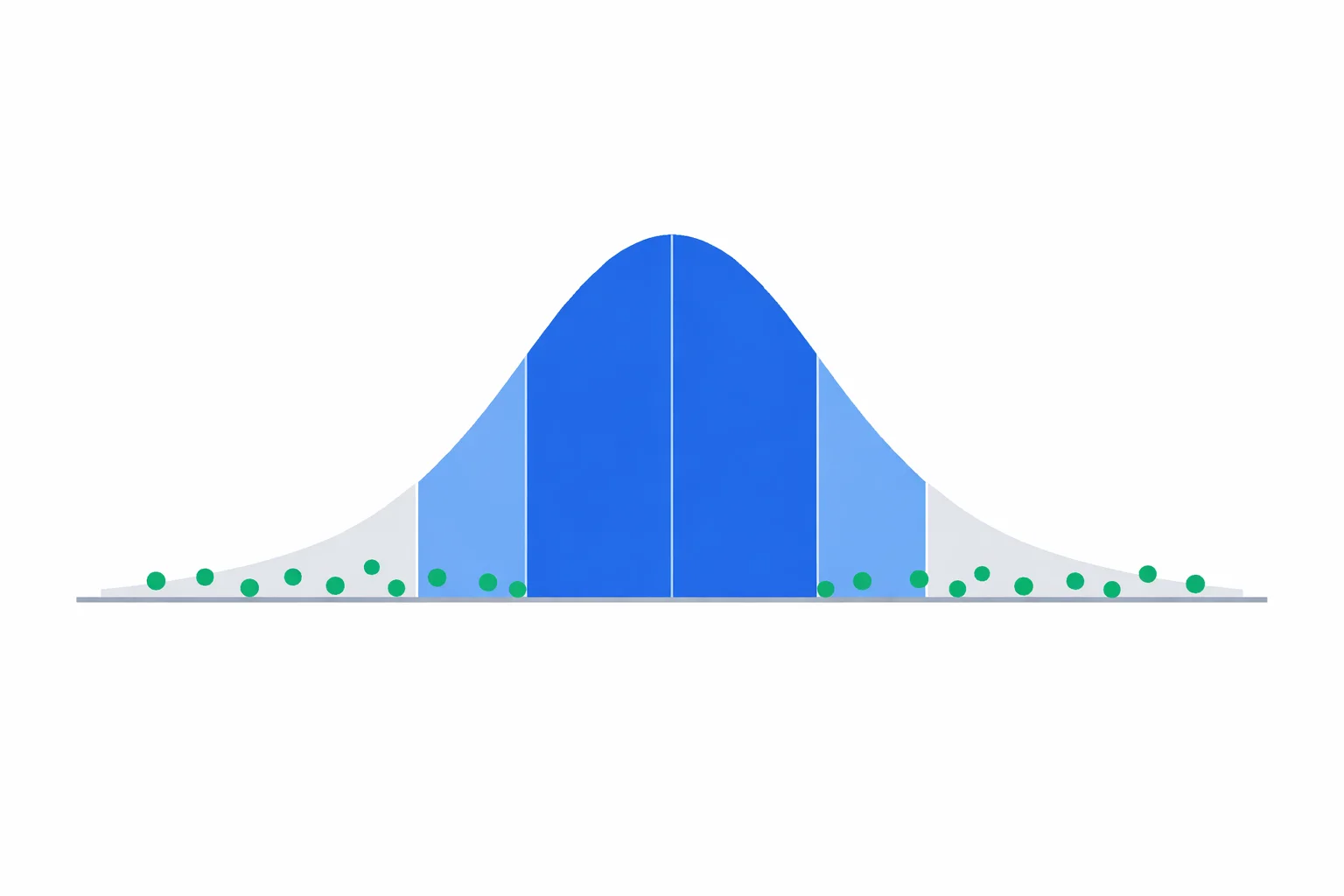
Standard Deviation Calculator
Find the standard deviation, standard error, and mean of your repeated lab readings. Switch between sample (n−1) and population (n) and see the spread plotted.
Use Calculator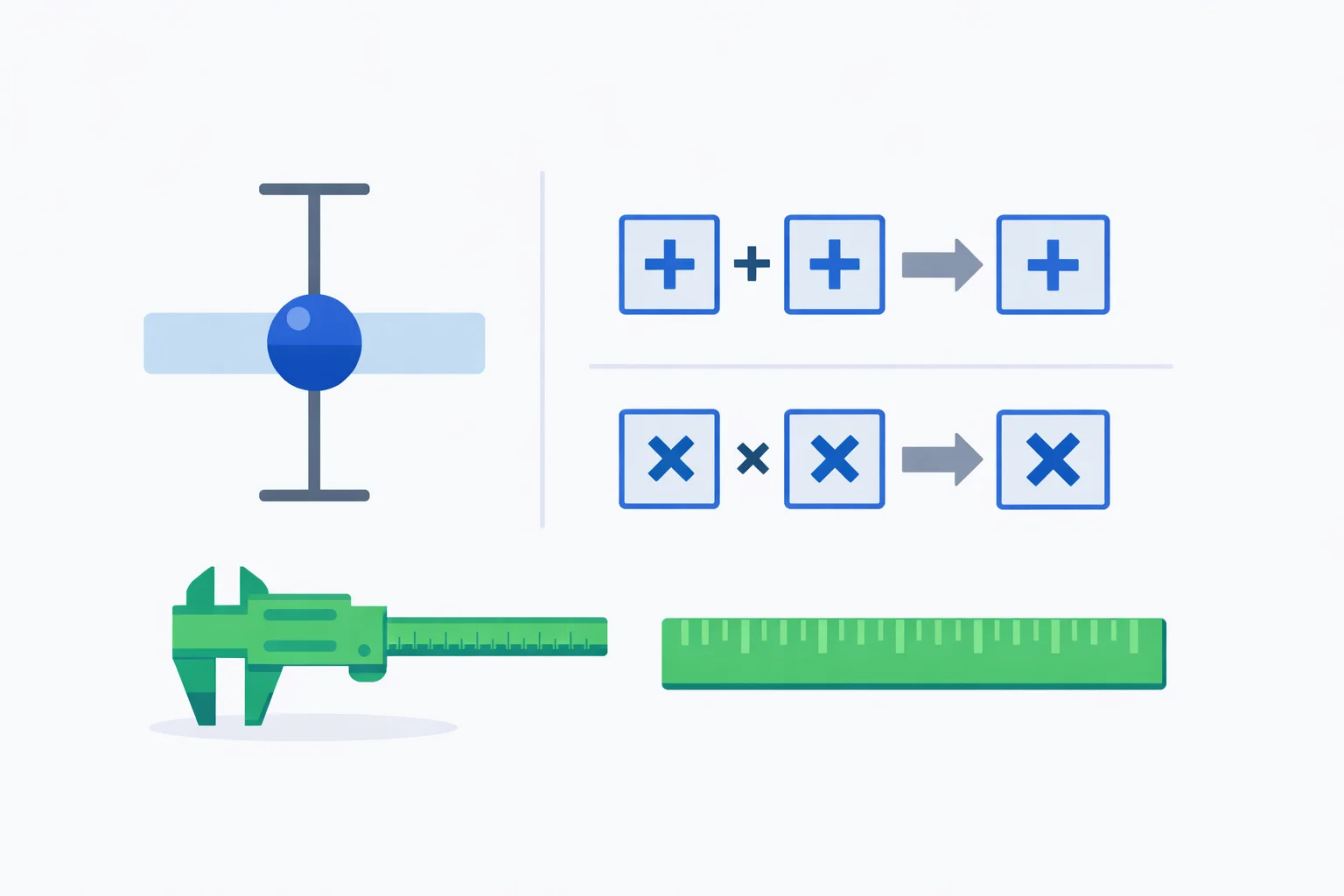
Uncertainty Calculator
Calculate measurement uncertainty and propagate error through sums, products, and powers. Find absolute, relative, and percent uncertainty for physics lab data.
Use CalculatorUnderstanding Measurement & Uncertainty
Every physics measurement carries uncertainty — no ruler, scale, or sensor is perfectly precise. Understanding and quantifying that uncertainty is what separates a meaningful result from a guess. Percent error tells you how close your measured value is to the accepted value, while standard deviation reveals how consistent your repeated measurements are. A lab measurement of g = 9.6 ± 0.3 m/s² communicates far more than simply writing 9.6 m/s².
Error propagation rules let you track how uncertainties combine through calculations. When you add or subtract measurements, absolute uncertainties add. When you multiply or divide, relative uncertainties add. These rules ensure your final answer honestly reflects the precision of the raw data. Significant figures provide a simpler (though less rigorous) way to track precision through multi-step problems.
Measurement skills connect directly to every branch of physics. Our graph & data analysis calculators help you plot data with error bars and extract slopes with uncertainties. Precise measurements are especially critical in kinematics experiments, where small timing errors can significantly affect calculated accelerations.