Force & Motion Calculators — Solve Newton's Laws Problems
Calculate net force, tension, friction, normal force, and centripetal force using Newton's laws. Each calculator includes free-body diagram guidance and worked examples.
Force & Motion Calculators
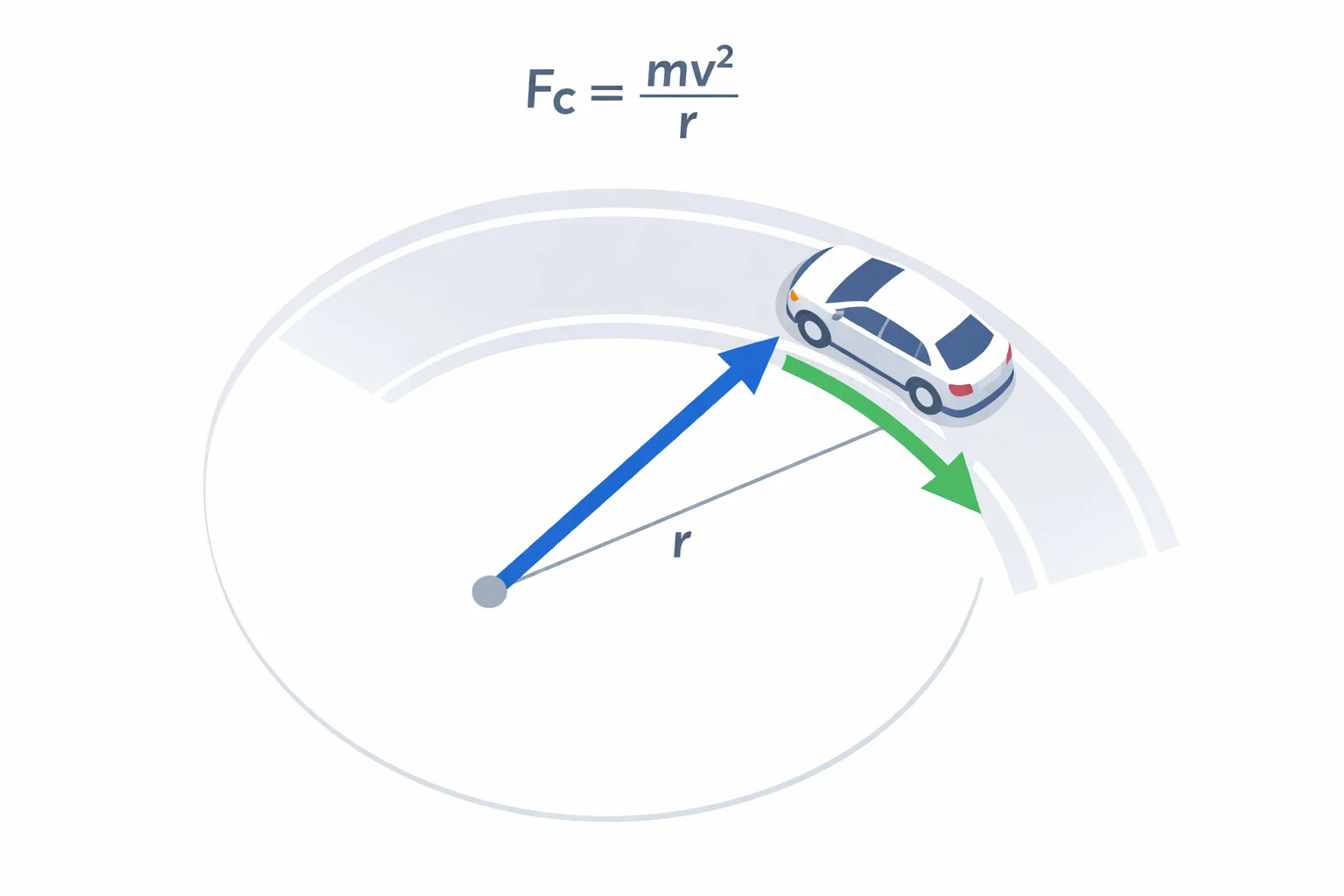
Centripetal Force Calculator
Calculate centripetal force from speed, RPM, or period. Enter mass and radius to get the force, centripetal acceleration, g-force, and the grip a curve needs.
Use Calculator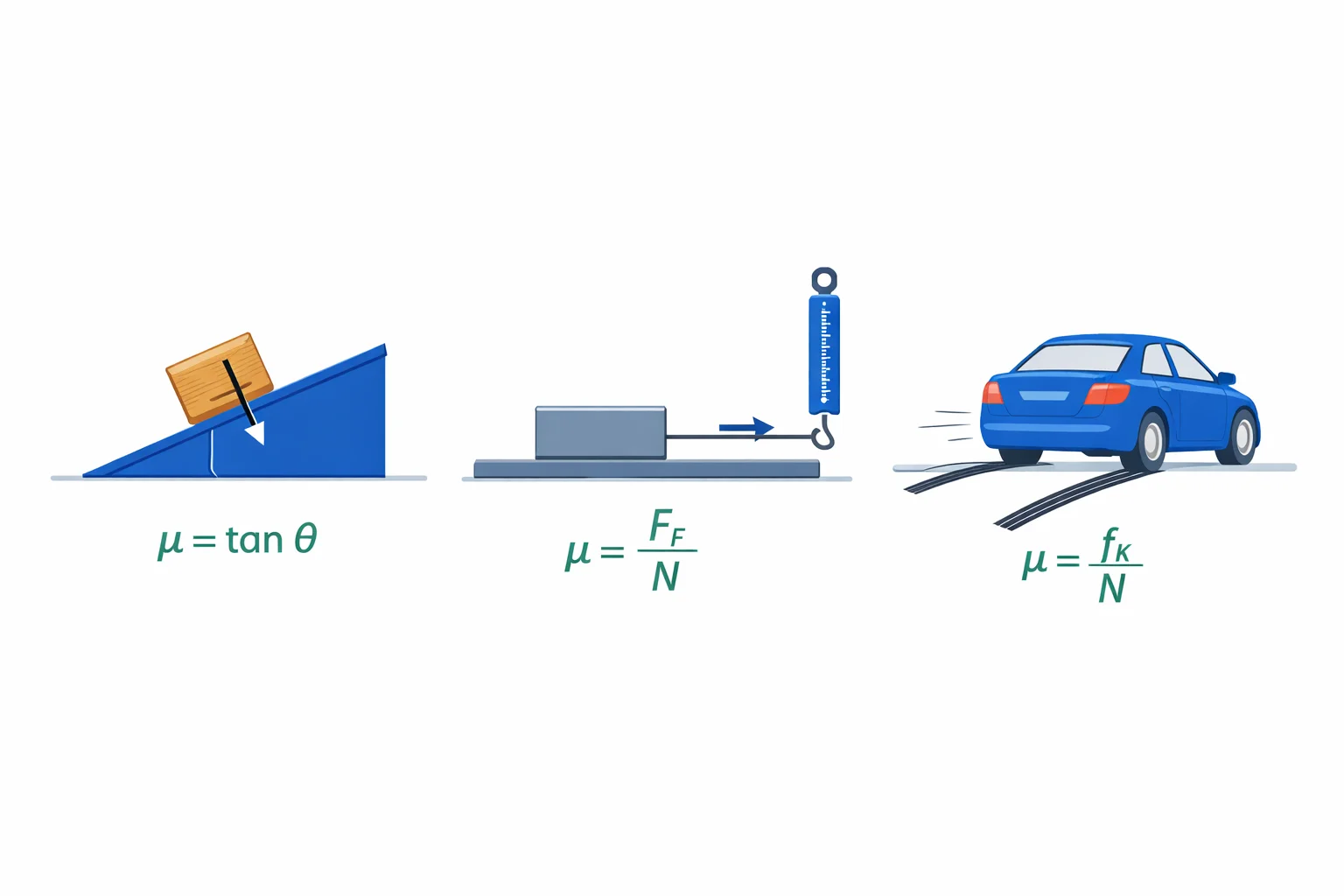
Coefficient of Friction (Mu) Calculator
Calculate the coefficient of friction (mu) three ways: from friction and normal force, from a ramp's slip angle, or from skid distance. Get static or kinetic μ.
Use Calculator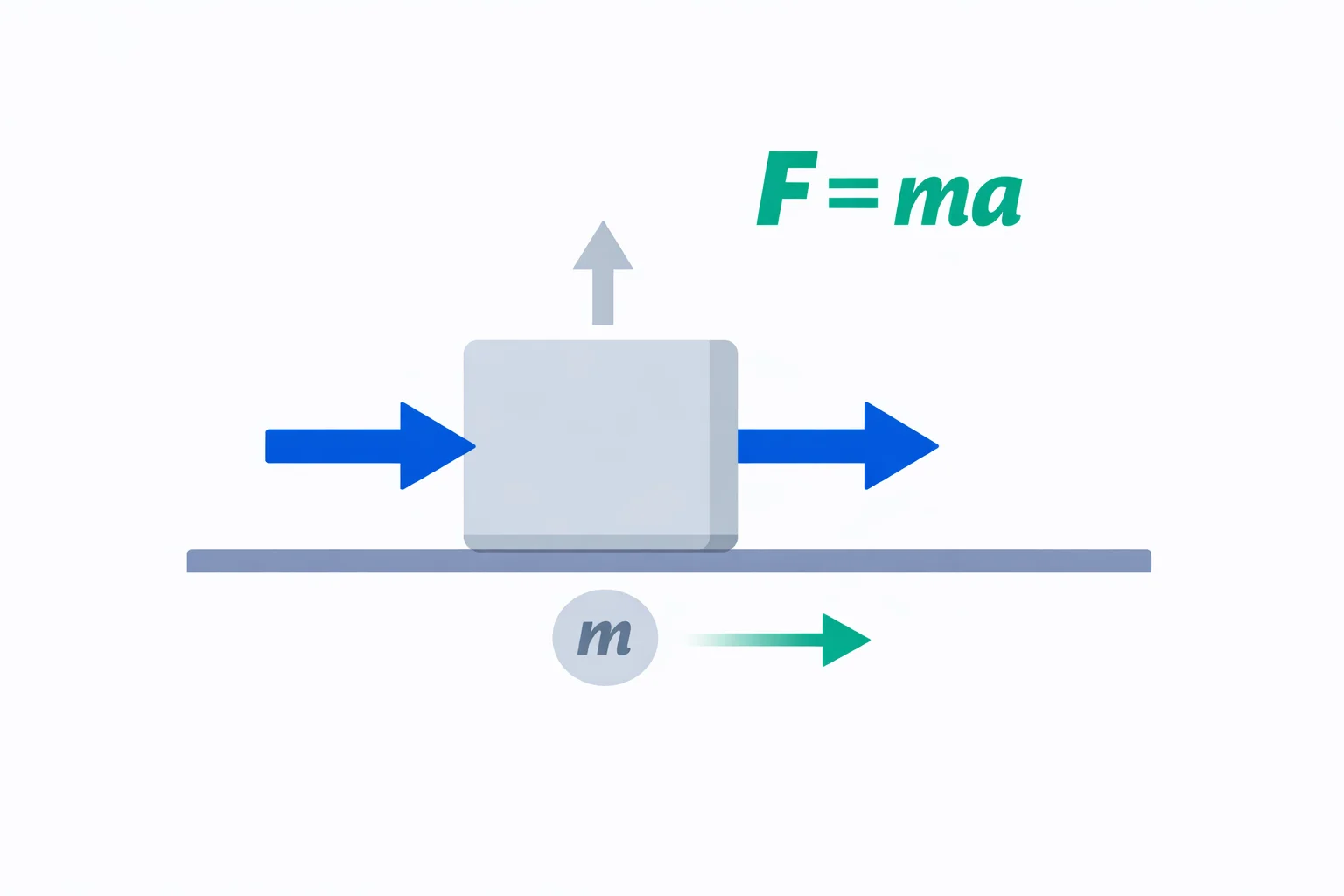
Force Calculator
Calculate force, mass, or acceleration using F = ma. Solve Newton\u2019s Second Law problems with unit conversions, real-world presets, and step-by-step breakdowns.
Use Calculator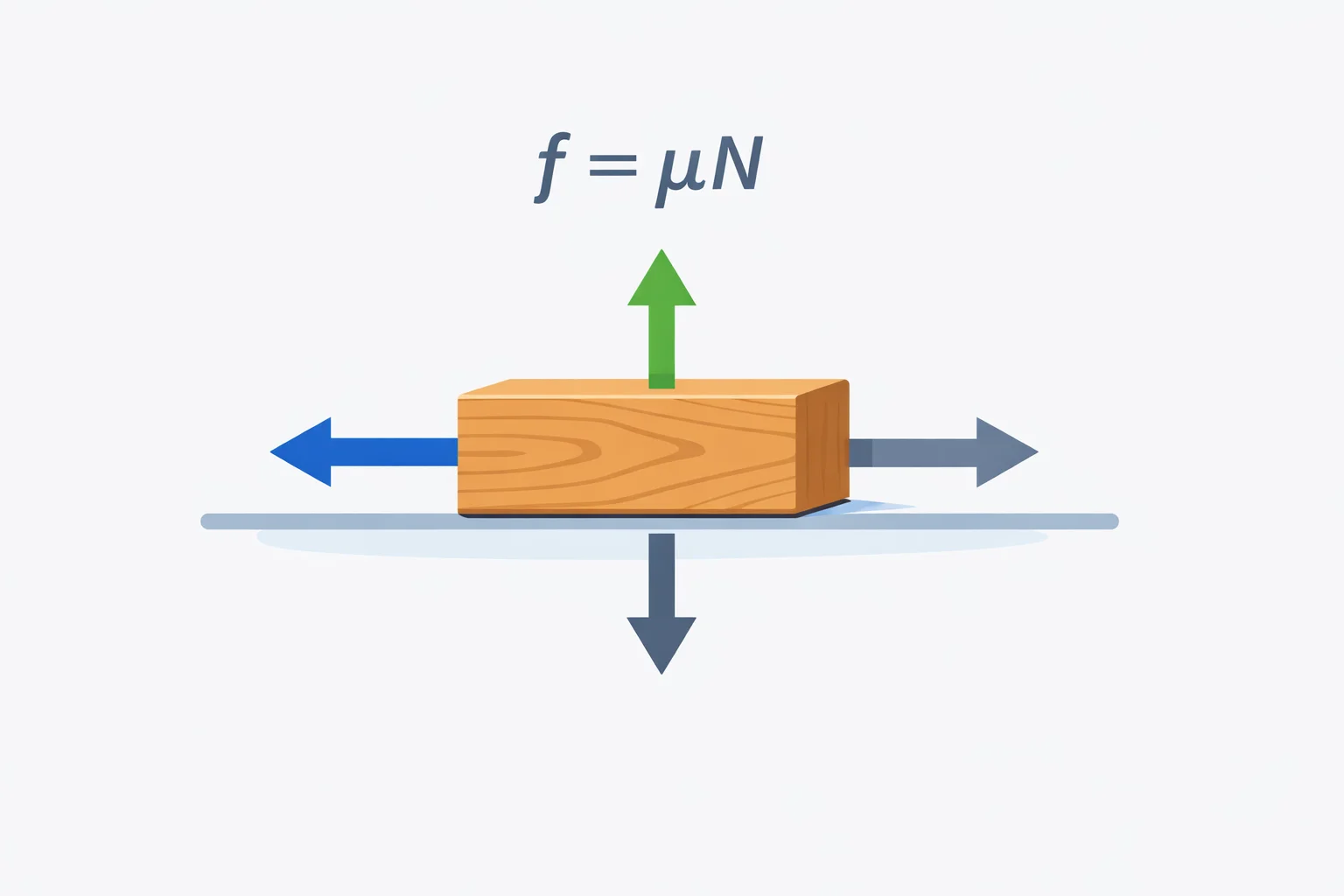
Friction Force Calculator
Calculate static and kinetic friction force on flat ground or an incline. Pick a surface pair, get the slip threshold, angle of repose, and acceleration.
Use Calculator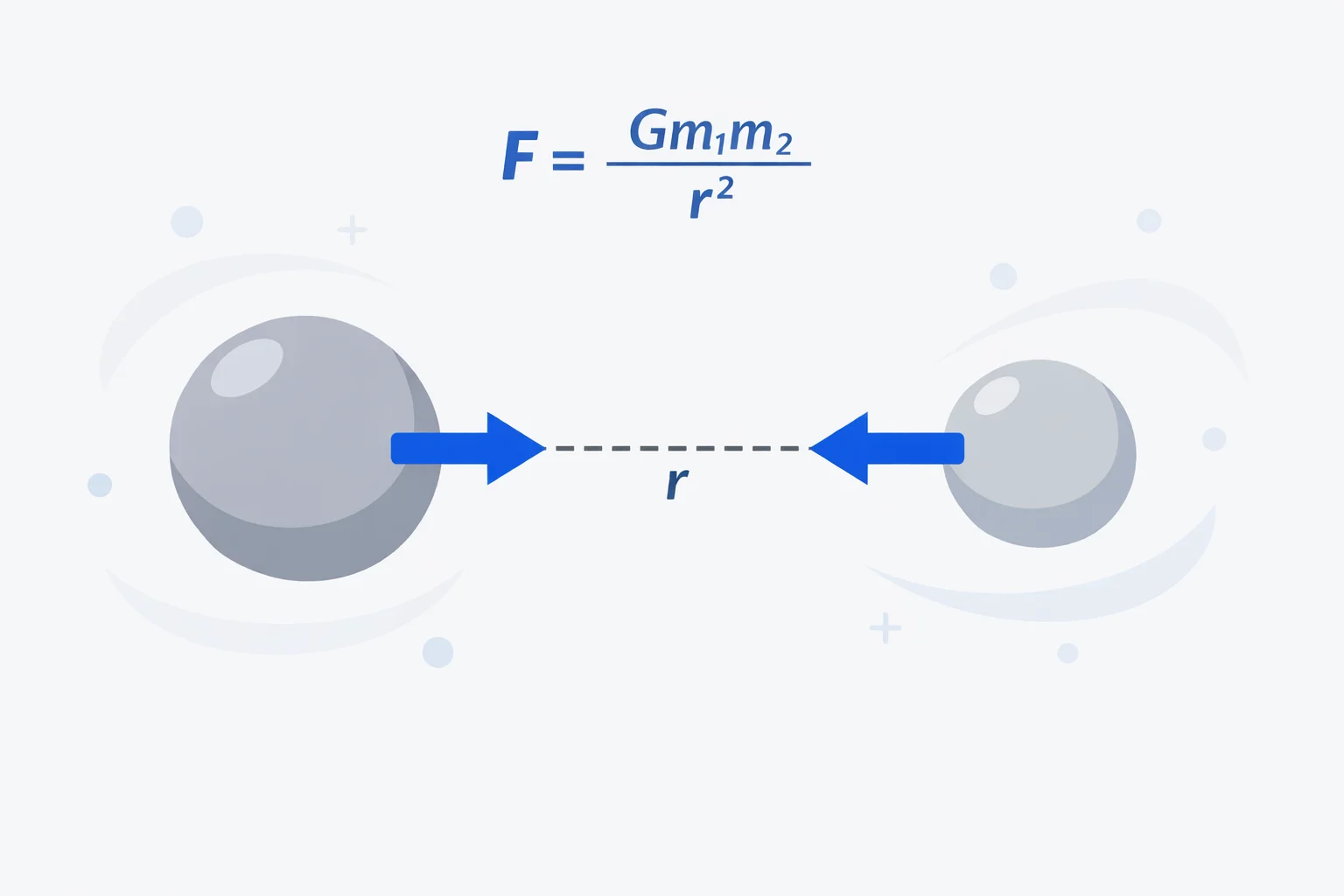
Gravitational Force Calculator
Calculate the gravitational force between two masses with Newton's law of universal gravitation, F = Gm₁m₂/r². Compare planets, people, and orbits instantly.
Use Calculator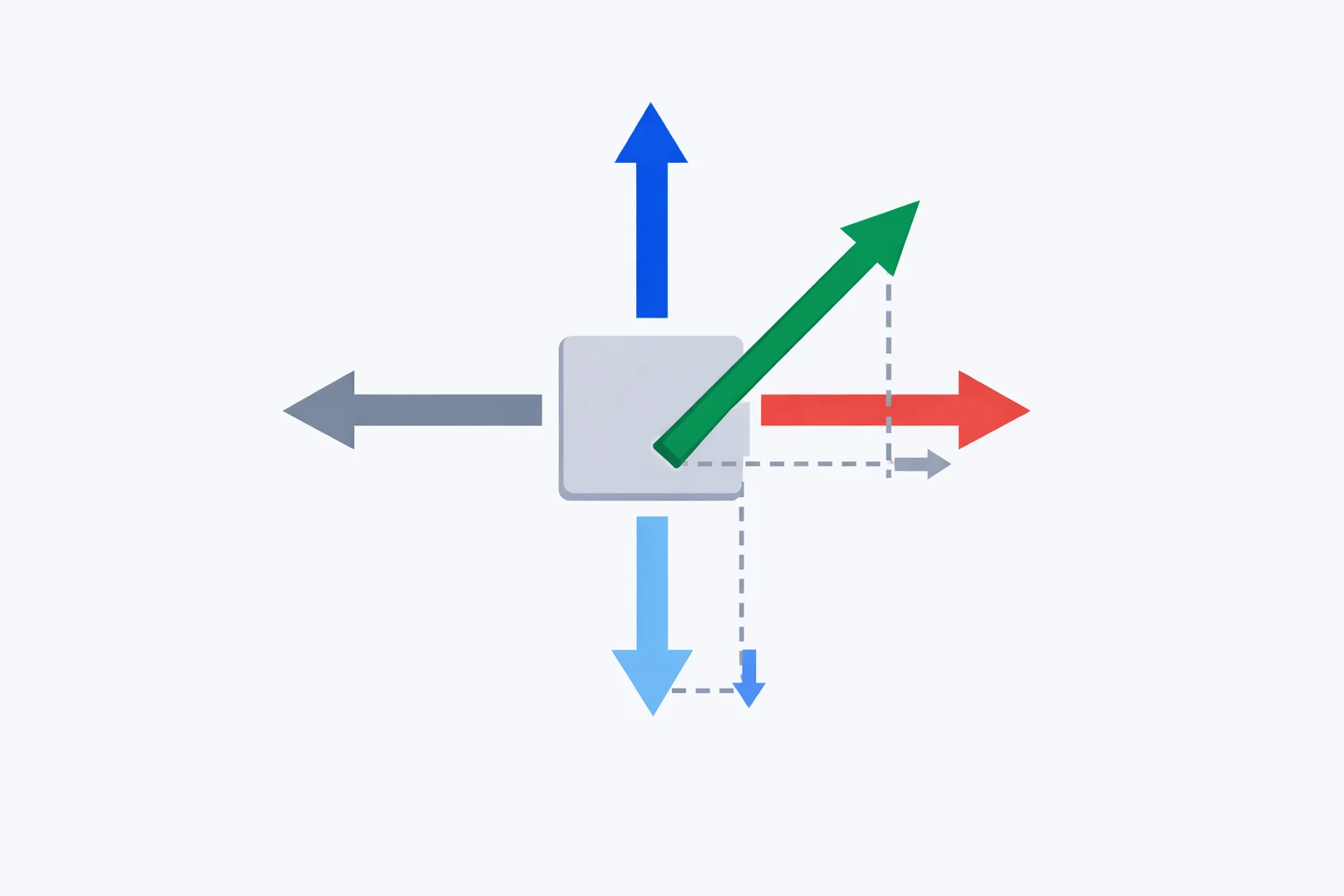
Net Force Calculator
Calculate net force by adding force vectors with magnitudes and angles. Find the resultant force, direction, and x/y components instantly.
Use Calculator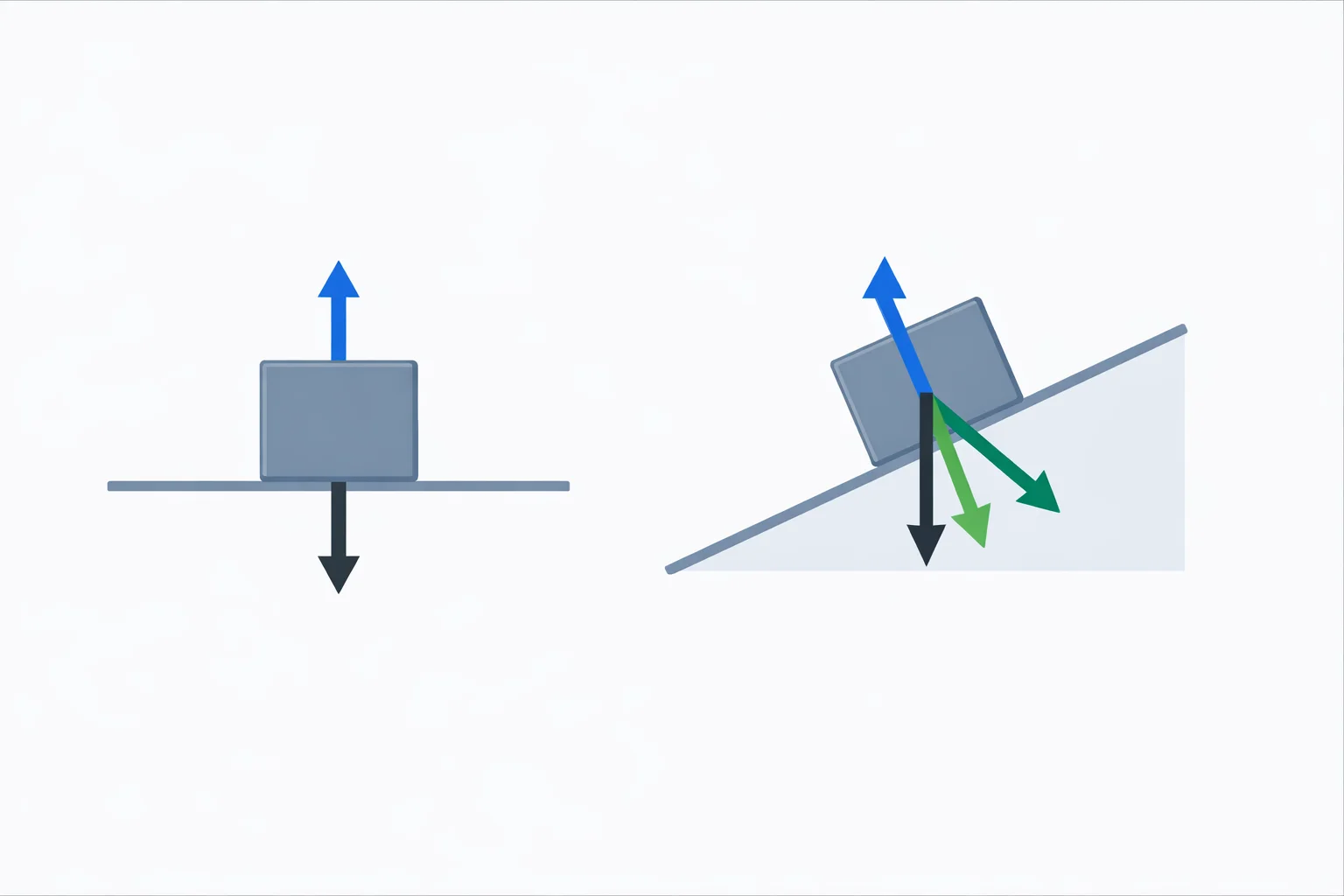
Normal Force Calculator
Calculate normal force on flat surfaces, inclines, and accelerating elevators. Solve with applied forces at angles and see step-by-step free body diagram math.
Use Calculator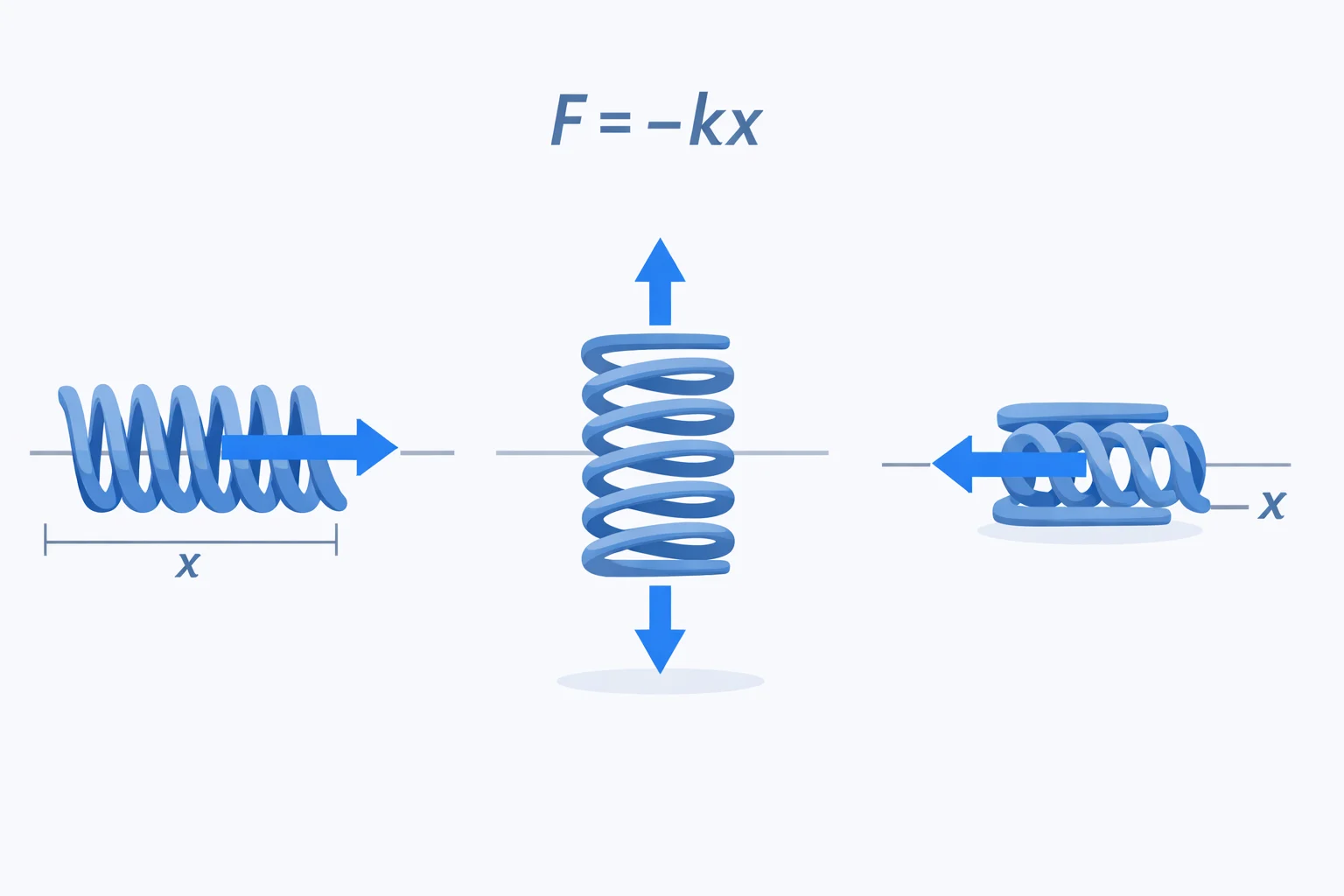
Spring Force Calculator
Spring force calculator for Hooke's Law F = kx. Solve for force, spring constant, or stretch, plus the elastic energy stored — with the full math shown.
Use Calculator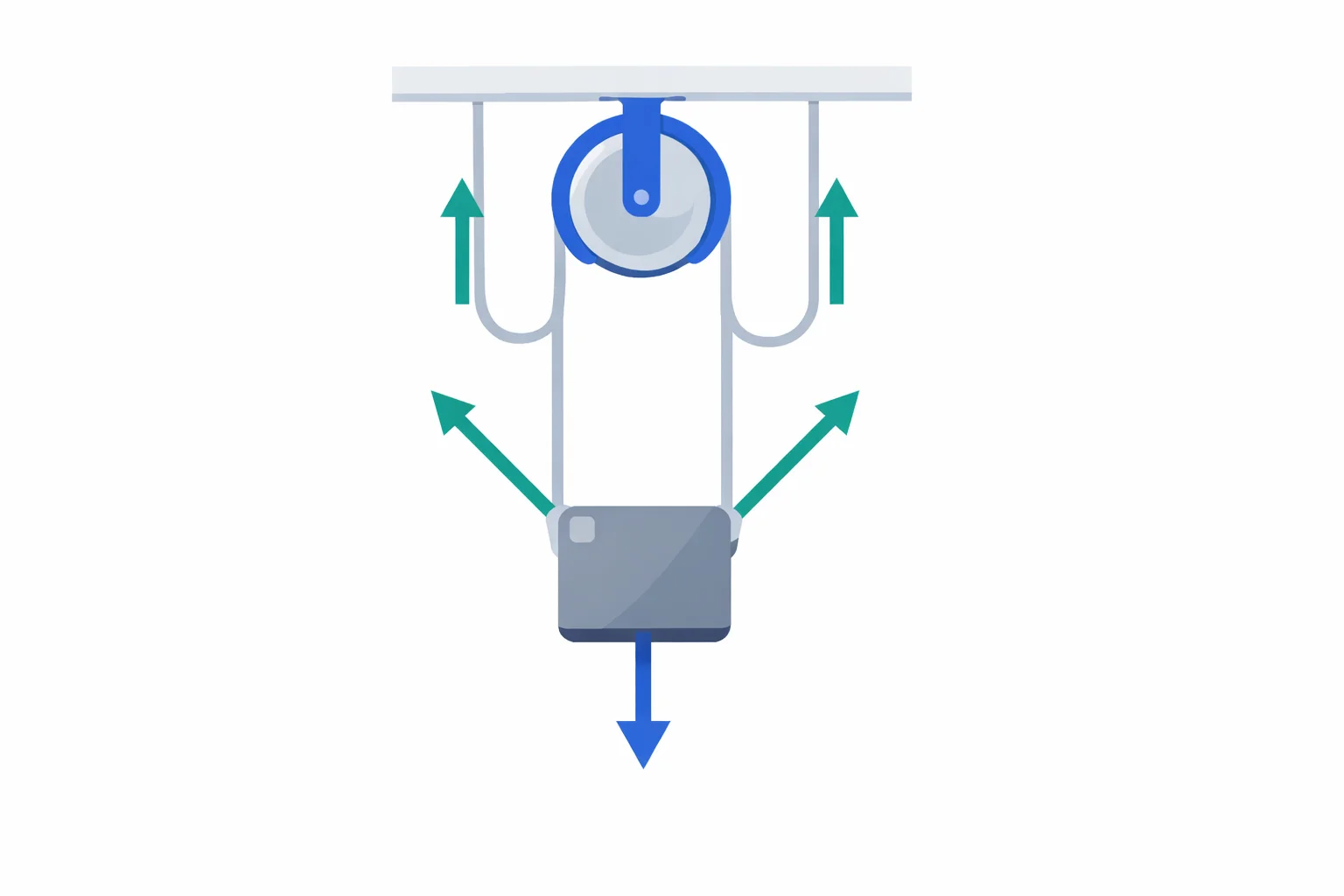
Tension Calculator
Calculate tension force in ropes, cables, and strings. Solve hanging objects, inclined planes, and pulley systems with step-by-step physics solutions.
Use CalculatorUnderstanding Forces in Physics
Forces are the foundation of classical mechanics and the key to understanding why objects move the way they do. Newton's second law, F = ma, connects force directly to acceleration: a 10 N net force on a 2 kg object produces an acceleration of 5 m/s². Every AP Physics problem involving motion starts with identifying the forces, drawing a free-body diagram, and applying Newton's laws to find the unknown quantities.
In practice, force problems combine multiple force types acting simultaneously. A box sliding down a ramp involves gravity, the normal force, and kinetic friction. A car rounding a curve depends on static friction providing the centripetal force. A mass hanging from two ropes requires resolving tension vectors into components. Mastering these combinations is what separates students who understand physics from those who merely memorize formulas.
Force and motion are tightly connected to other branches of mechanics. Once you know the net force and acceleration, you can use kinematics equations to find velocity and displacement over time. The work done by a force leads directly into energy and work calculations, where W = Fd cos(θ) connects force to energy transfer.