Fitness Test Calculators — Military PFT Scores & Calories Burned
Score military fitness tests (Marine PFT, Army ACFT, Air Force, Navy PRT) and estimate calories burned using MET values and body weight.
Fitness Calculators
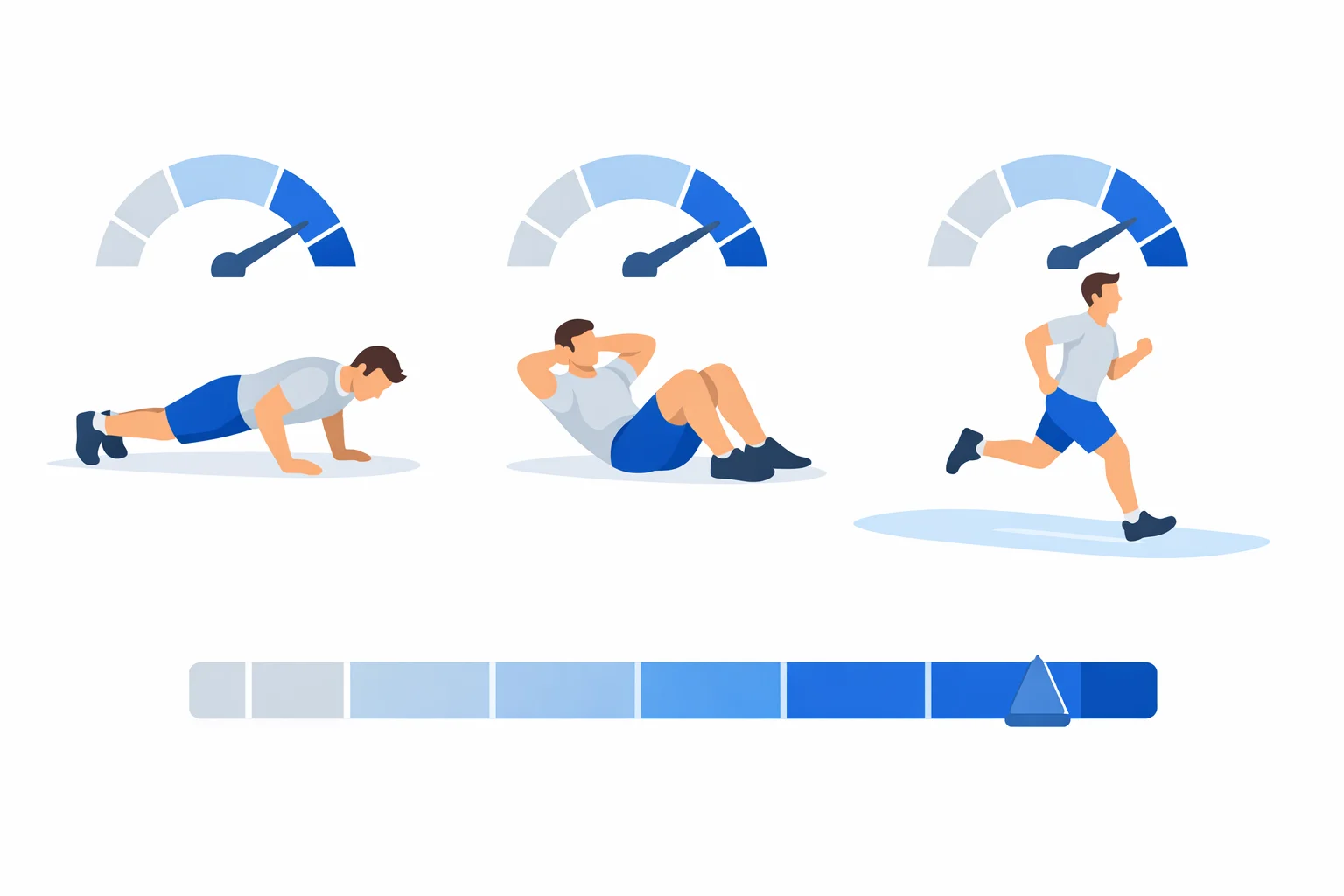
Air Force Fitness Test Calculator
Calculate your Air Force Physical Fitness Assessment score instantly. Enter push-ups, sit-ups, and 1.5-mile run time to get your composite PFA score by age and gender.
Use Calculator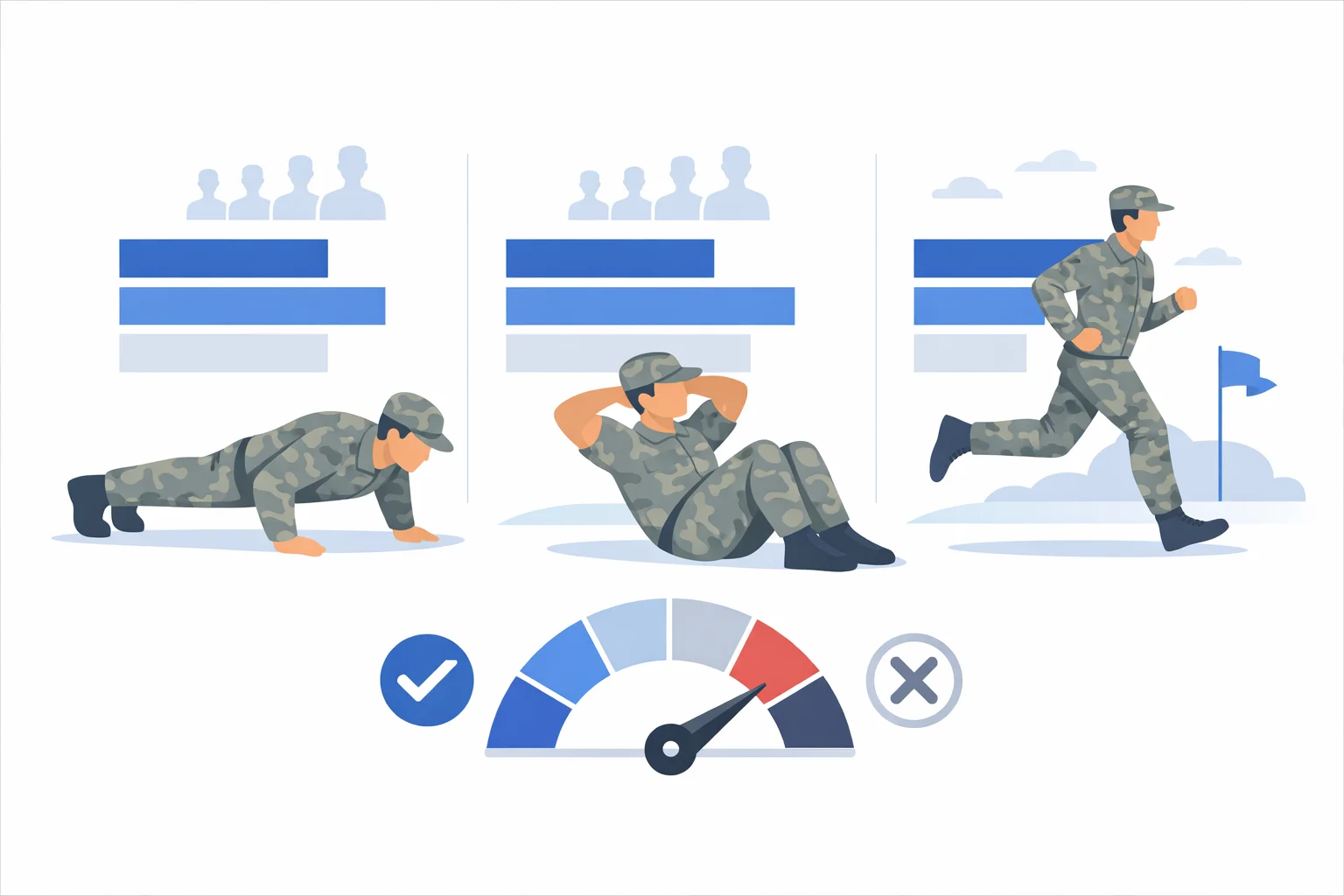
Army APFT Calculator
Calculate your Army Physical Fitness Test score instantly. Enter push-ups, sit-ups, and 2-mile run time to get your APFT score, rating, and pass/fail status.
Use Calculator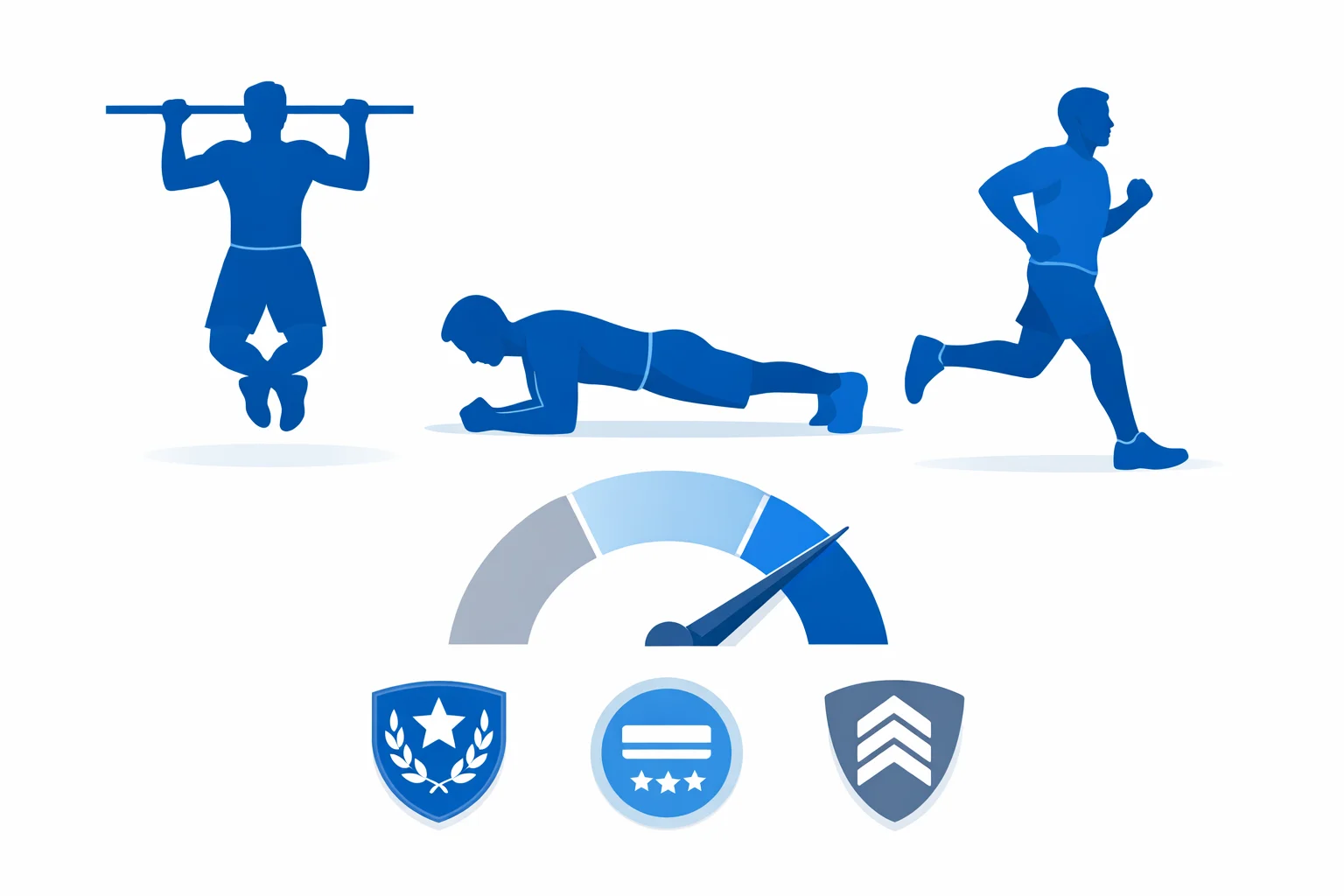
Marine Corps PFT Calculator
Calculate your Marine Corps Physical Fitness Test score. Enter pull-ups or push-ups, plank time, and 3-mile run to get your PFT score and class.
Use Calculator
Navy PRT Calculator
Calculate your Navy Physical Readiness Test score. Enter push-ups, plank time, and 1.5-mile run to get your PRT score and category by age and gender.
Use Calculator
Calories Burned Calculator
Calculate calories burned during any physical activity. Enter body weight, exercise type, and duration to estimate energy expenditure using MET values.
Use Calculator
Physical Activity Level Calculator
Estimate your daily energy needs based on physical activity level. Find your BMR multiplier and recommended calorie intake for your lifestyle.
Use Calculator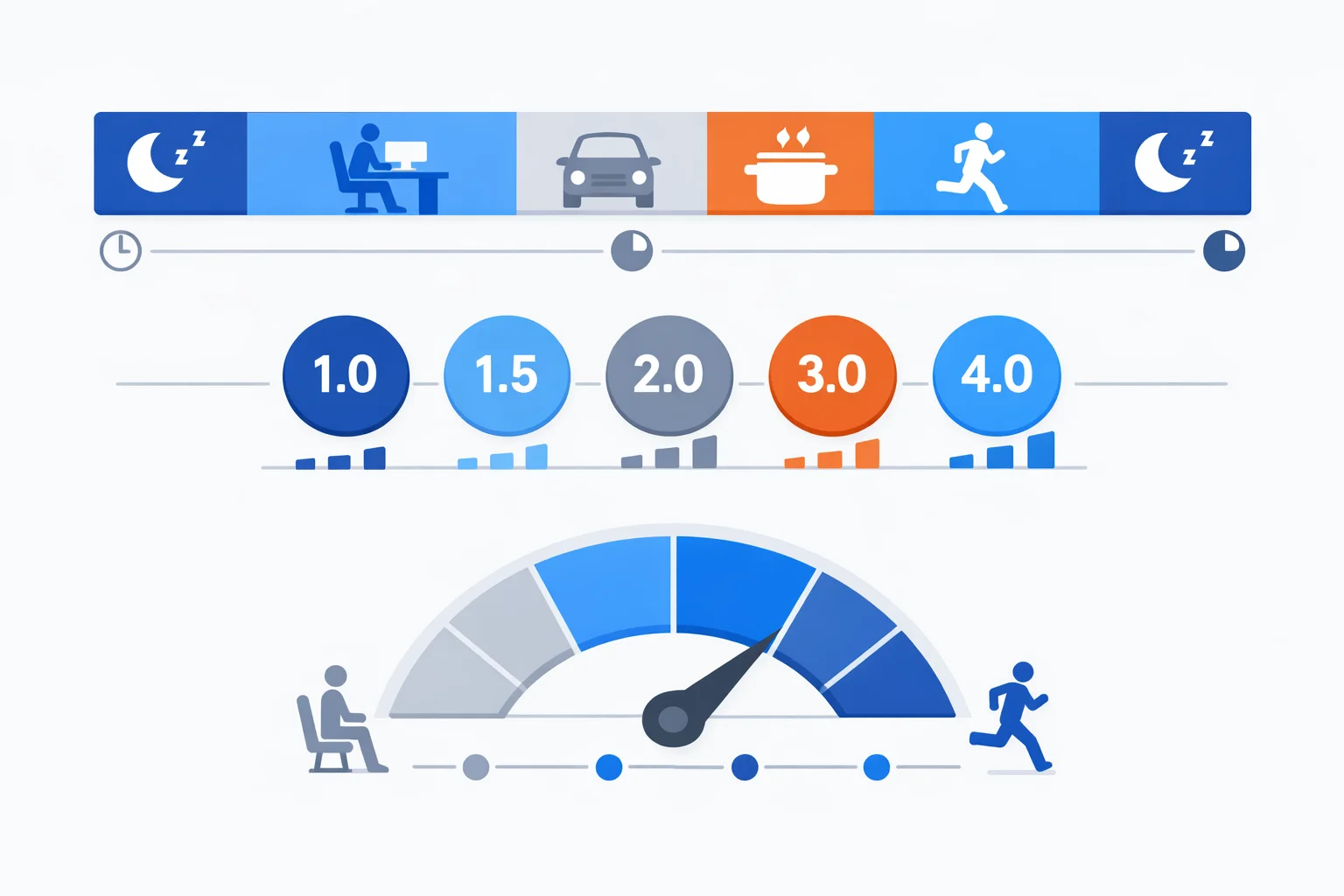
Physical Activity Level (PAL) Calculator
Calculate your Physical Activity Level ratio from daily activities. Enter time spent sleeping, working, and exercising to find your PAL value and total energy expenditure.
Use CalculatorUnderstanding Physical Fitness Tests
Military physical fitness tests measure strength, endurance, and cardiovascular capacity using standardized events. Each branch has its own test: the Marine PFT (pull-ups, crunches, 3-mile run), the Army ACFT (six combat-focused events), the Air Force fitness assessment, and the Navy PRT. Scores are adjusted for age and gender, with specific minimums required for continued service and promotions. Understanding the scoring tables helps service members target weak areas and train more effectively.
Calorie and energy calculations apply physics principles to human performance. The MET system quantifies exercise intensity relative to resting metabolism: sitting quietly is 1 MET, brisk walking is 3.5 METs, and running at 8 mph is about 11.8 METs. Multiplying METs by body mass and duration gives a reliable estimate of calories burned, which connects directly to mass & weight concepts and nutritional planning.
The physics of fitness extends beyond simple calorie counting. Biomechanics involves energy, work & power — a 80 kg person climbing a 10 m rope does W = mgh = 80 × 9.8 × 10 = 7,840 J of work against gravity. Power output during a sprint, force generation in a deadlift, and the kinetic energy of a thrown ball all connect athletic performance to fundamental physics.