Momentum & Impulse Calculators — Collisions & Conservation
Calculate momentum (p = mv), impulse (J = F·Δt), and collision outcomes. Solve elastic and inelastic collision problems step by step with worked examples.
Momentum & Impulse Calculators
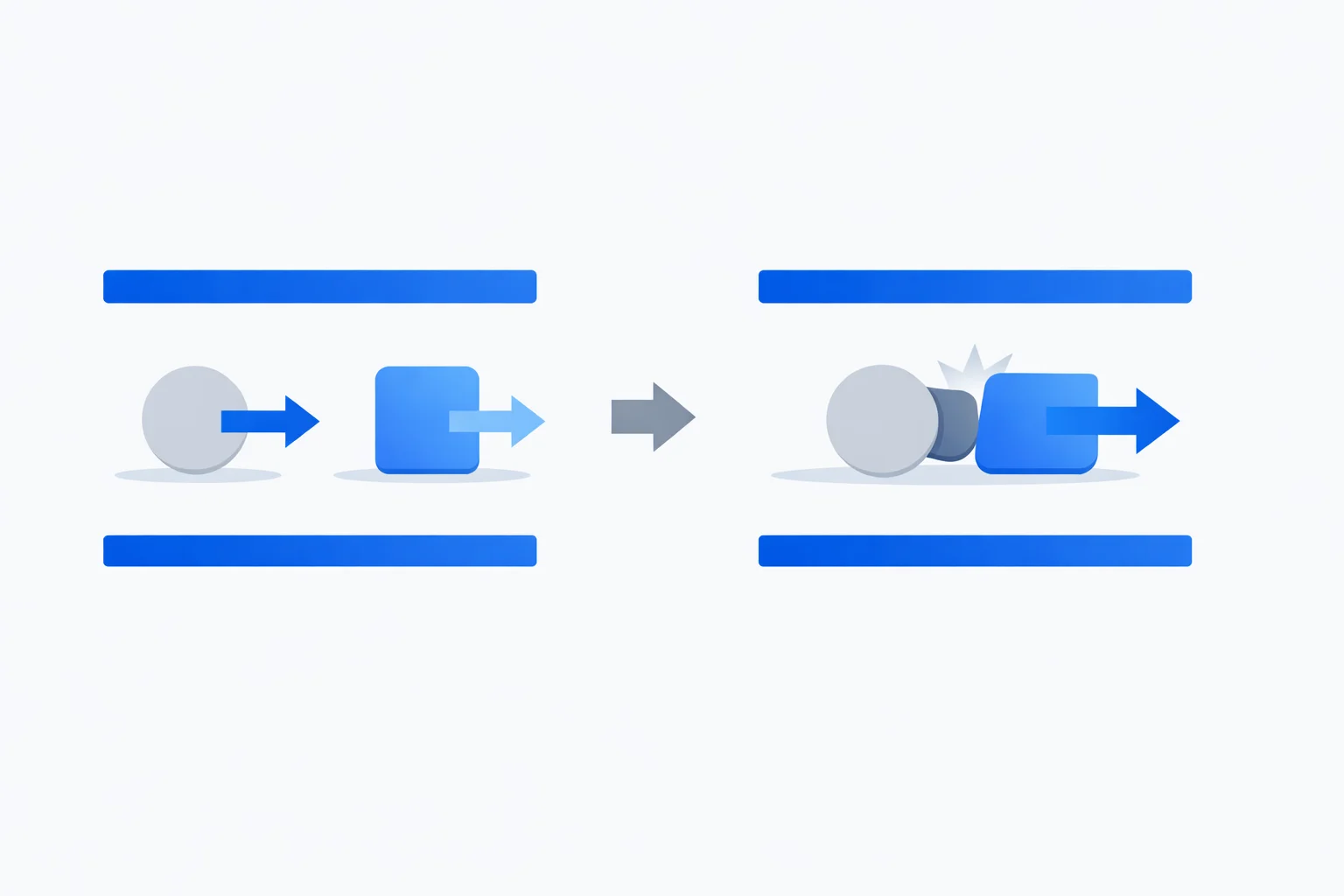
Conservation of Momentum Calculator
Solve conservation of momentum for collisions and explosions. Enter masses and before/after velocities to find each final speed and verify total momentum.
Use Calculator
Elastic Collision Calculator
Find final velocities after a perfectly elastic collision. Solve 1D head-on hits and 2D glancing scatters, with momentum and kinetic energy both conserved.
Use Calculator
Impulse Calculator
Calculate impulse from force and time (J = FΔt) or from a change in momentum (J = mΔv). See the average force behind every catch, kick, and airbag stop.
Use Calculator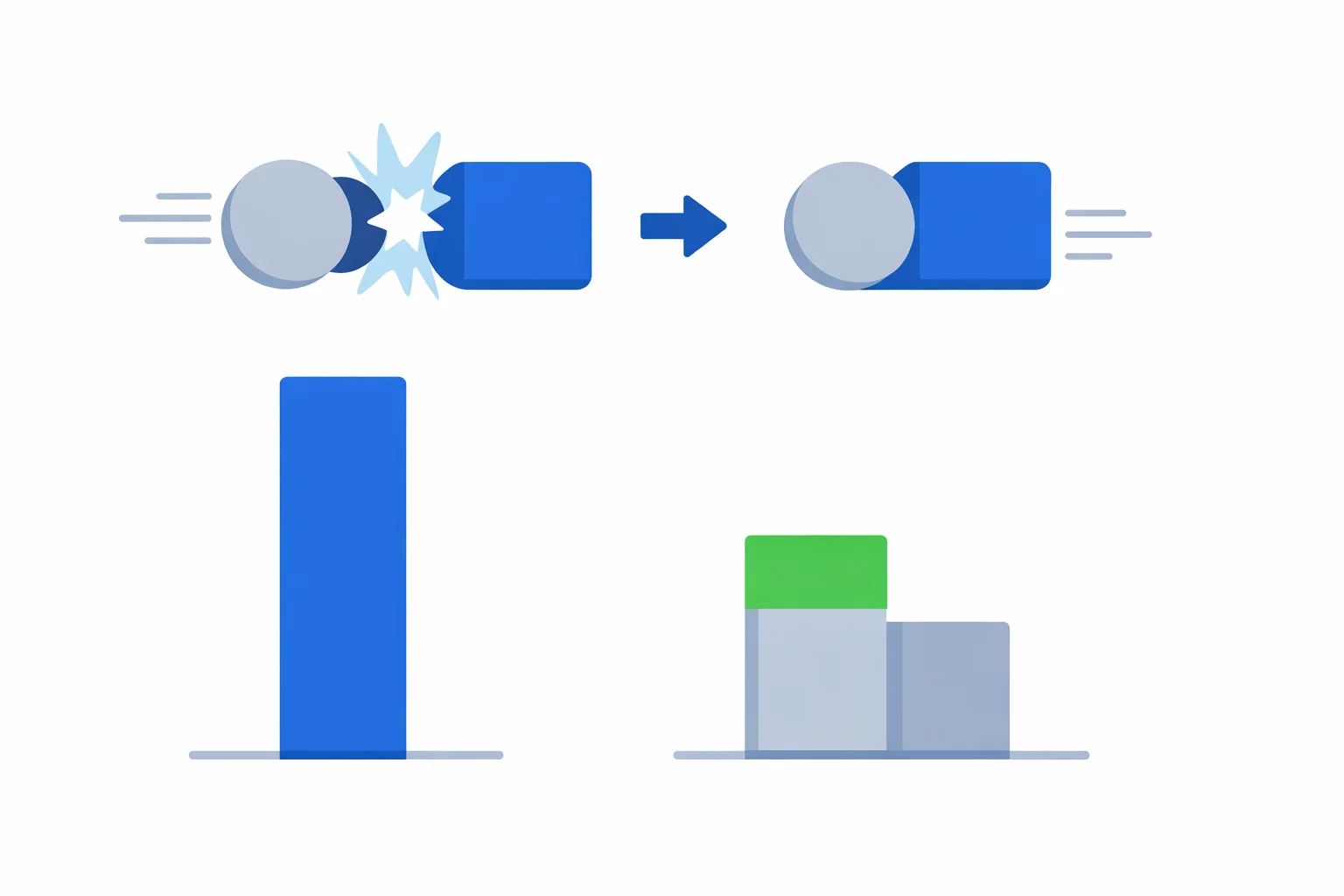
Inelastic Collision Calculator
Solve inelastic collisions: find the combined velocity when objects stick together, the energy lost as heat, and a ballistic pendulum's bullet speed.
Use Calculator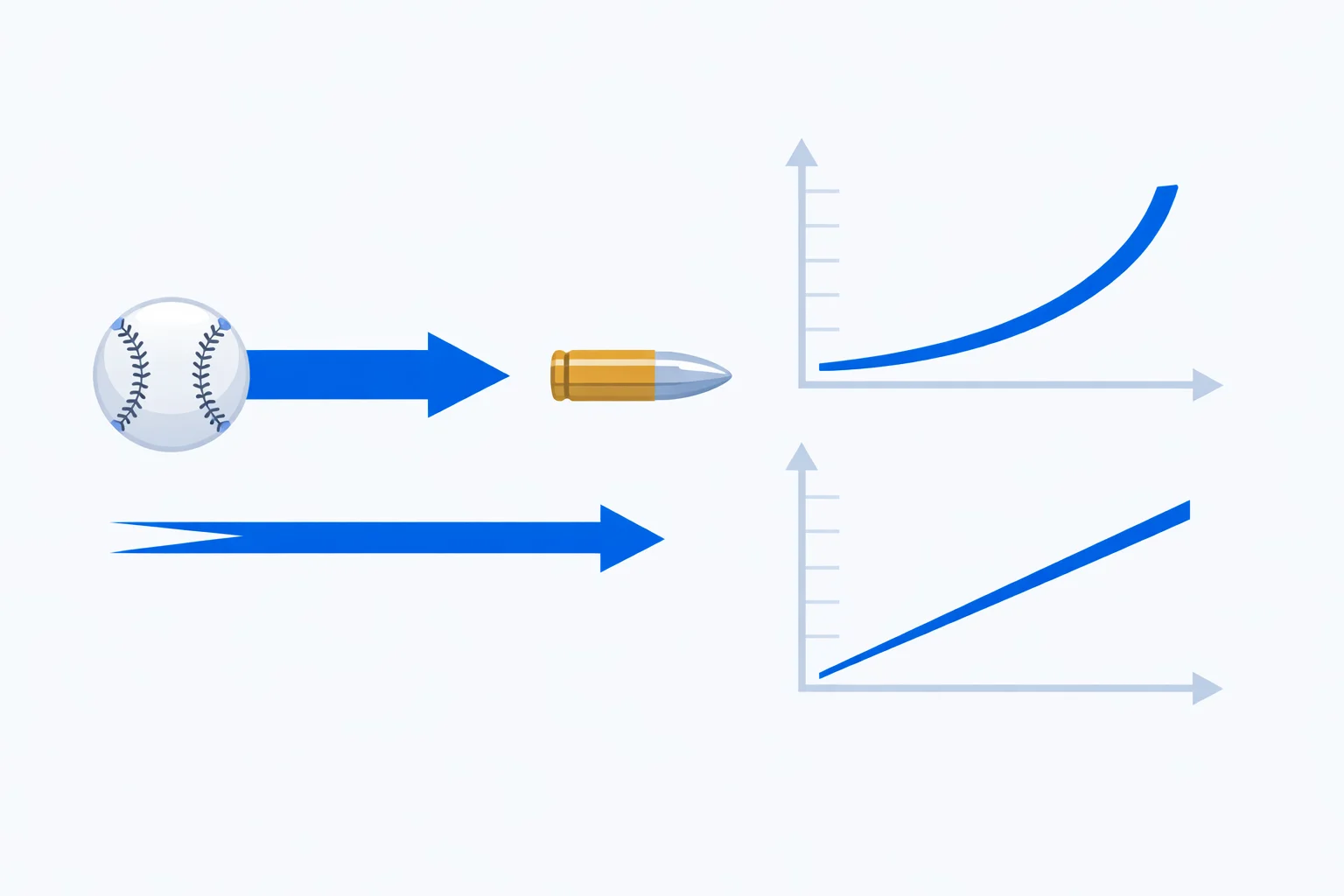
Momentum Calculator
Calculate momentum with p = mv, or solve for mass or velocity. See the kinetic energy beside every answer and why a fastball can out-momentum a bullet.
Use CalculatorUnderstanding Momentum & Impulse
Momentum (p = mv) measures how hard it is to stop a moving object. A 0.15 kg baseball at 40 m/s has 6 kg·m/s of momentum, while a 2,000 kg car at just 0.003 m/s has the same momentum. This makes momentum a more complete measure of "motion" than speed alone, because it accounts for both mass and velocity.
Impulse (J = FΔt) is the mechanism for changing momentum. The impulse-momentum theorem — J = Δp — is one of the most practical equations in physics. It explains why catching a ball with soft hands hurts less (longer Δt, smaller F) and why a hammer drives a nail more effectively than a gentle push (shorter Δt, larger F for the same impulse).
Collision problems are the classic application of momentum conservation. Whether you're analyzing a car crash, a billiard ball collision, or a spacecraft docking, the total momentum before equals the total momentum after. These problems often combine momentum with force analysis (to find collision forces) and energy conservation (to determine if a collision is elastic or inelastic).