Modern Physics Calculators — Quantum, Relativity & Nuclear Decay
Calculate photon energy (E = hf), de Broglie wavelength, relativistic energy (E = mc²), and radioactive decay half-life for quantum and nuclear physics.
Modern Physics Calculators
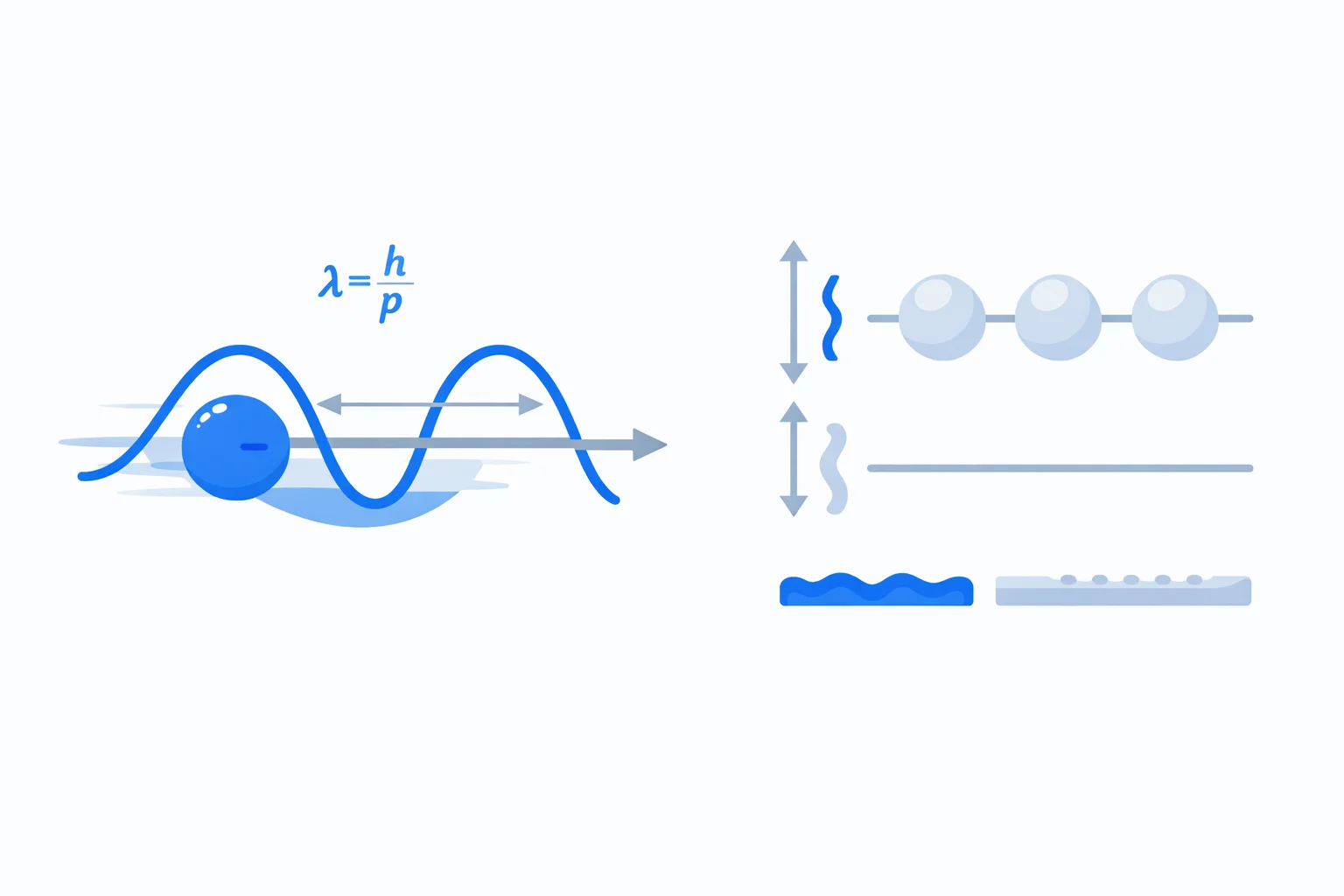
De Broglie Wavelength Calculator
Find the de Broglie wavelength of any particle from velocity, kinetic energy, or accelerating voltage. Get λ = h/p in pm, nm, or Å with relativistic correction.
Use Calculator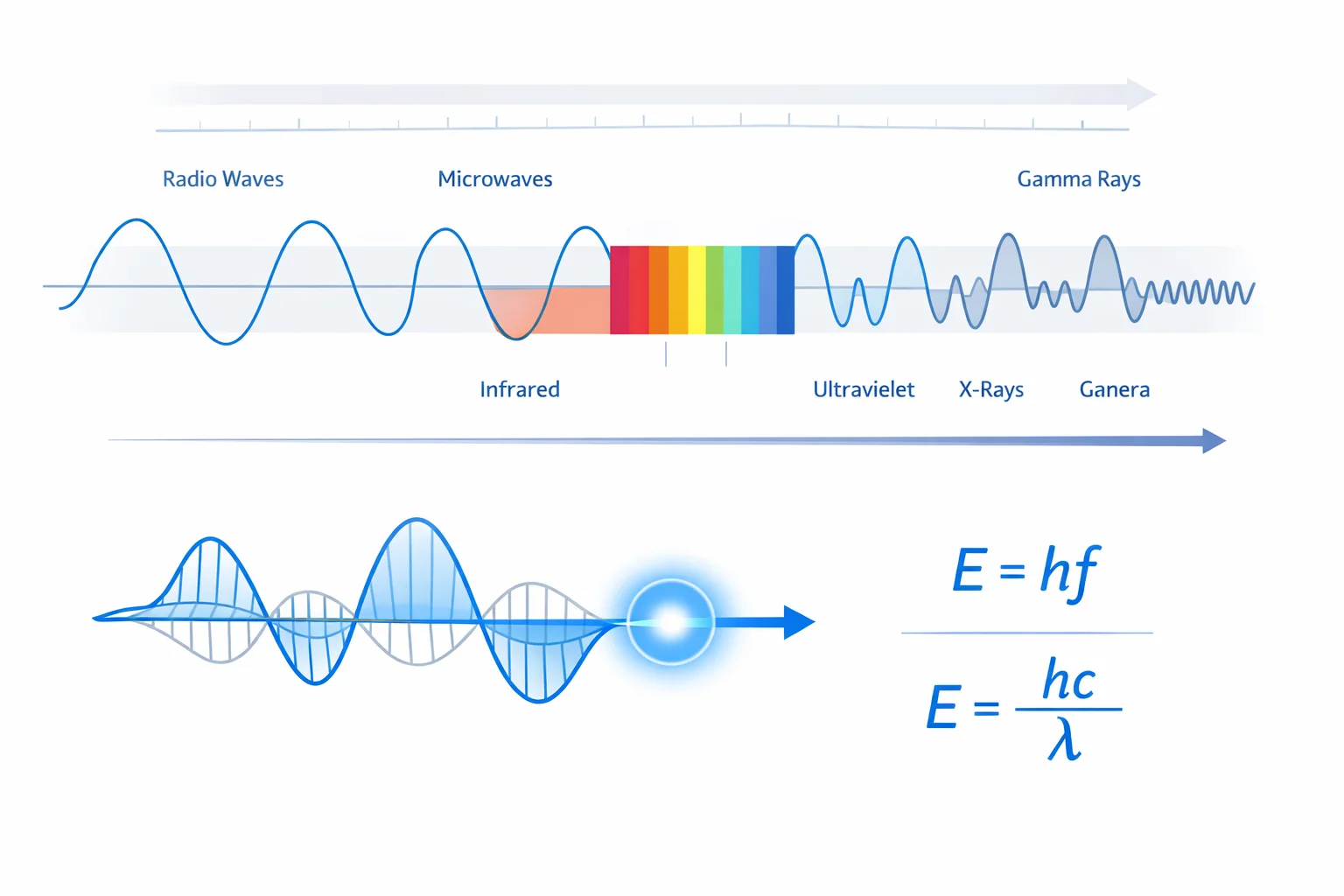
Photon Energy Calculator
Calculate photon energy from frequency or wavelength with E = hf and E = hc/λ. Get results in joules and electron volts, plus momentum and spectrum band.
Use Calculator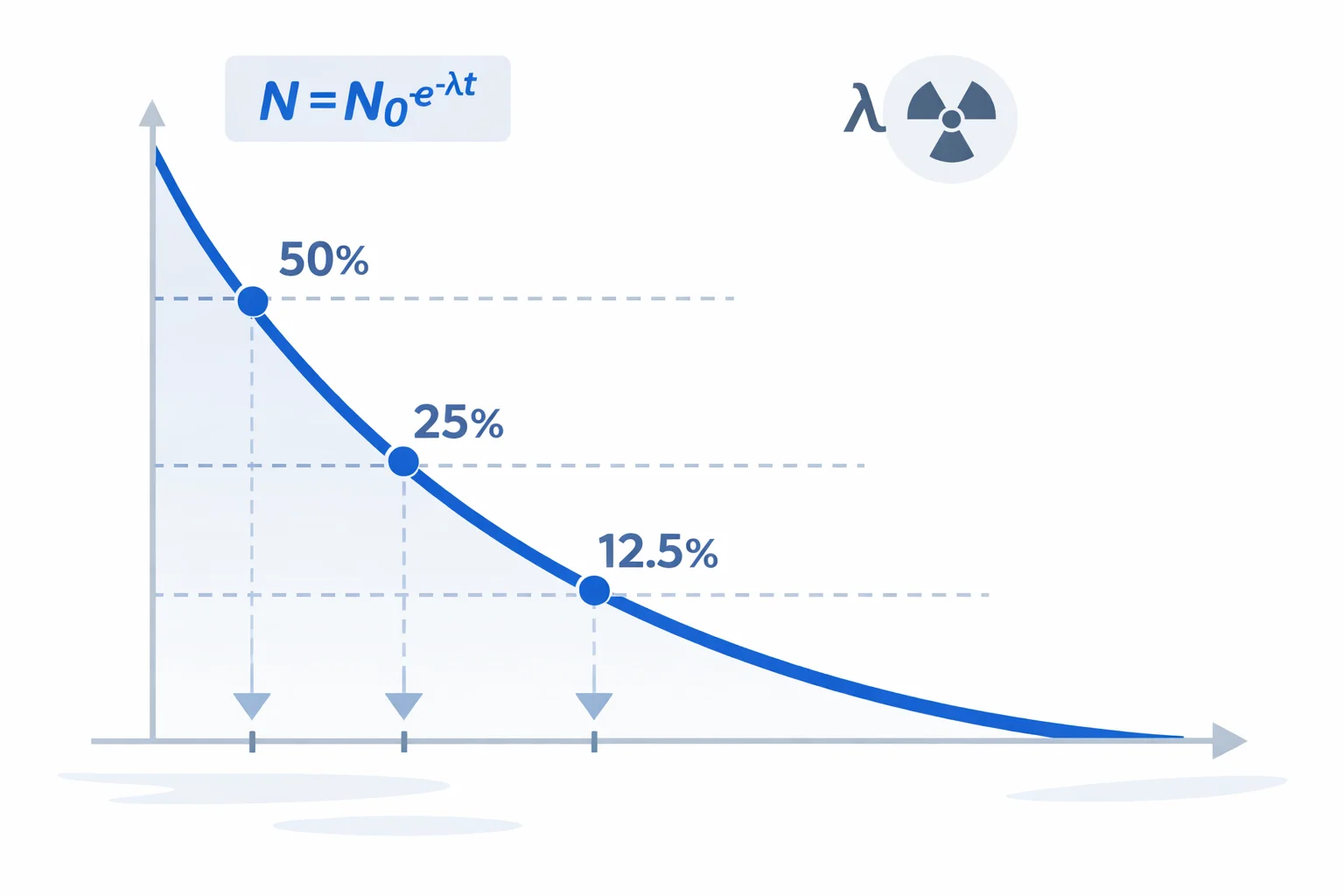
Radioactive Decay Calculator
Find how much of a radioactive sample is left after any time, or date it in reverse from the percent remaining. Enter half-life, amount, and elapsed time.
Use Calculator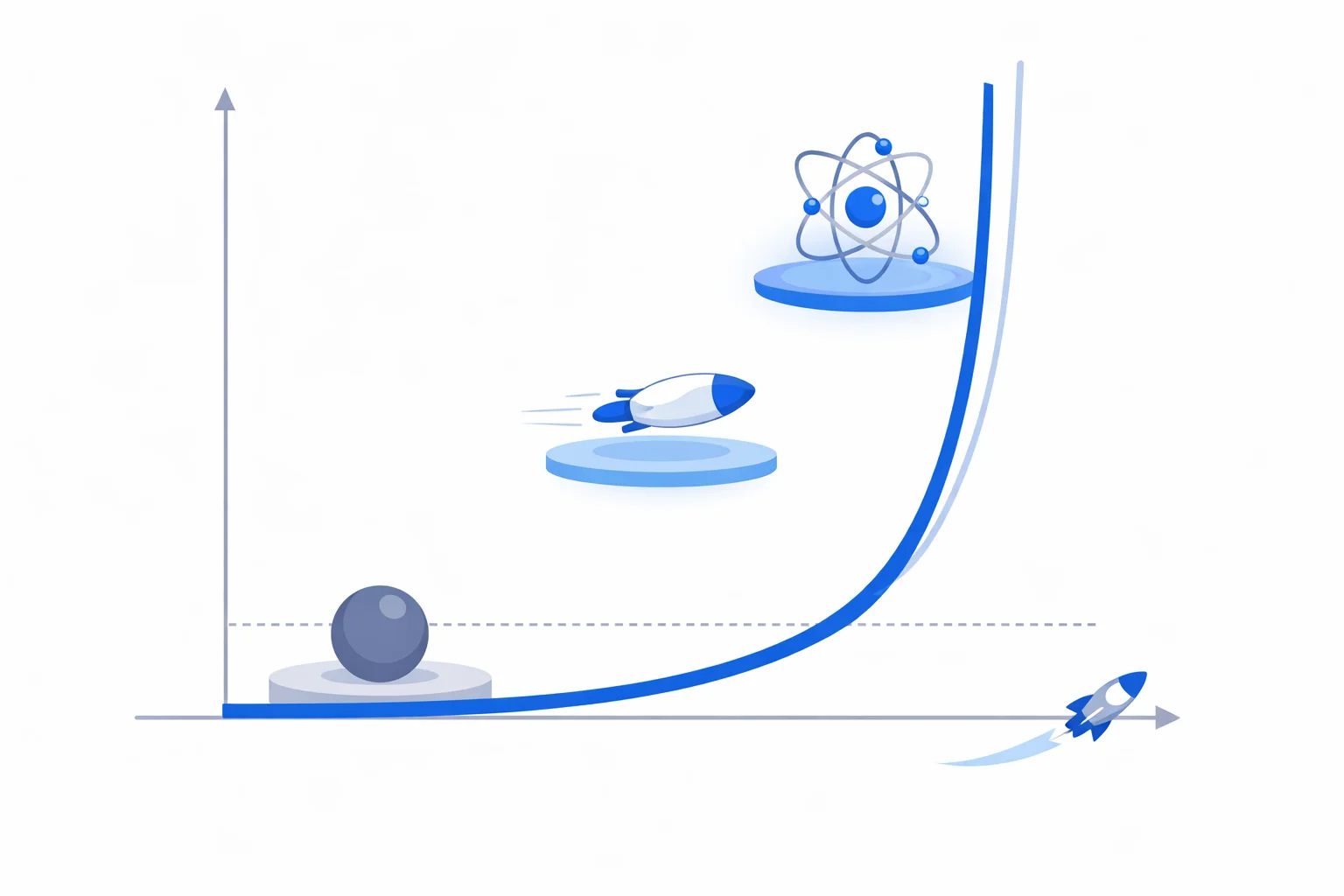
Relativistic Energy Calculator
Calculate rest energy, relativistic kinetic energy, and total energy with E = γmc². Compare ½mv² against the real value and see the Lorentz factor at any speed.
Use CalculatorUnderstanding Modern Physics
Modern physics emerged in the early 20th century when classical physics could not explain phenomena at atomic scales and near-light speeds. Einstein's E = mc² revealed that mass and energy are interchangeable — converting just 1 kg of matter releases 9 × 10¹&sup6; J, enough to power a city for years. This mass-energy equivalence is the foundation of nuclear energy, where fission of uranium-235 converts about 0.09% of its mass into energy.
Quantum mechanics introduced wave-particle duality and quantized energy levels. Photon energy (E = hf) explains why ultraviolet light causes sunburn but visible light does not — UV photons carry enough energy (3-10 eV) to break molecular bonds. The de Broglie wavelength (λ = h/mv) shows that all matter has wave properties, though they are only observable at atomic scales. Radioactive decay follows exponential half-life mathematics that predict exactly how much of a substance remains after any given time.
Modern physics builds on classical optics & light by explaining light's dual nature. It also extends energy conservation to include mass-energy equivalence, showing that the total mass-energy of an isolated system is always conserved even in nuclear reactions.