Mass, Weight & Gravity Calculators — Solve W=mg & Density
Calculate mass, weight (W = mg), gravitational acceleration, density, and center of gravity on Earth and other planets with free online tools.
Mass, Weight & Gravity Calculators

Center of Gravity Calculator
Find the center of gravity of any system. Enter each object's mass and position to get the exact balance point, shown live on a 1D beam or 2D diagram.
Use Calculator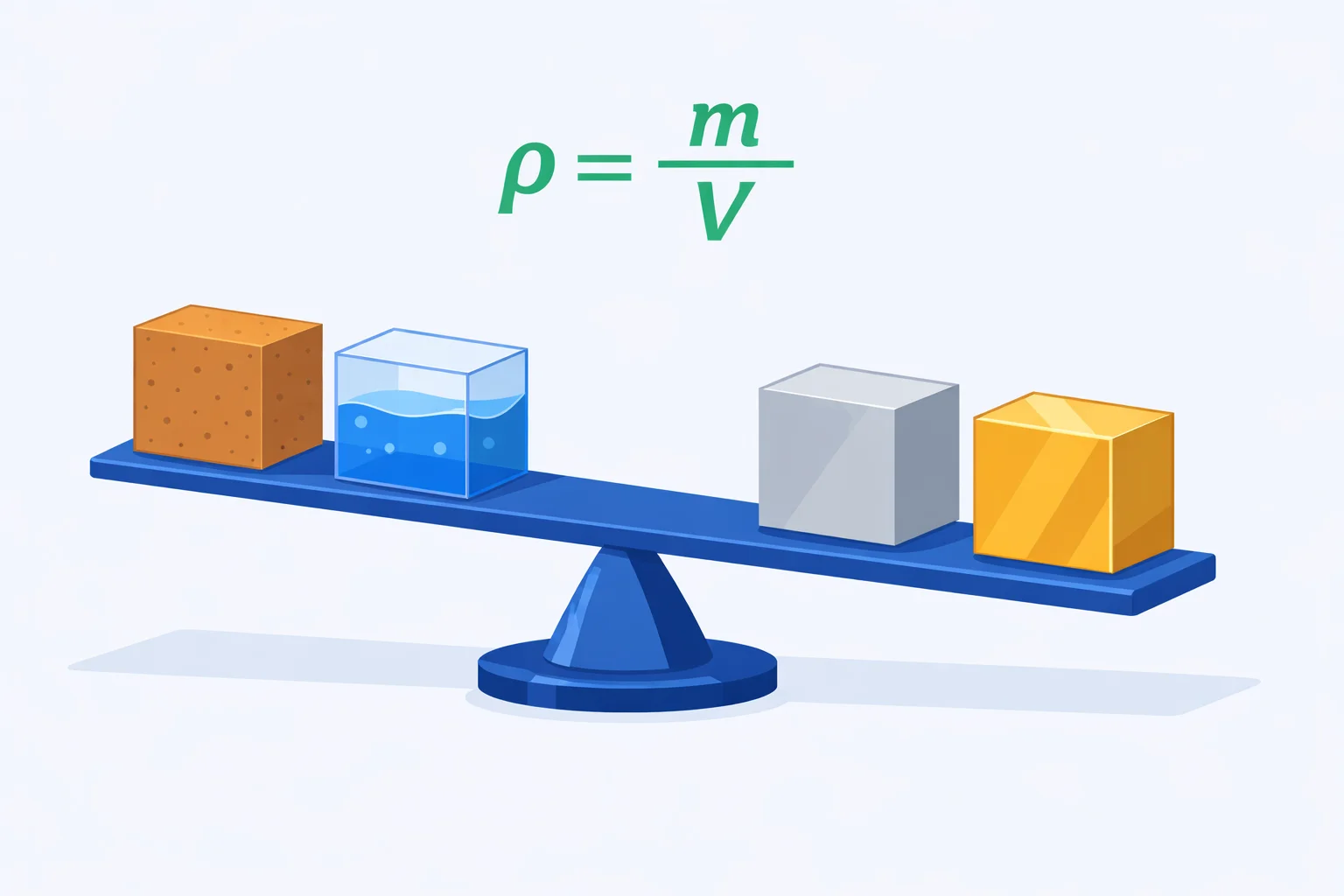
Density Calculator
Calculate density with ρ = m/V, or solve for mass or volume. Convert g/cm³ and kg/m³, test if an object floats, and match its density to real materials.
Use Calculator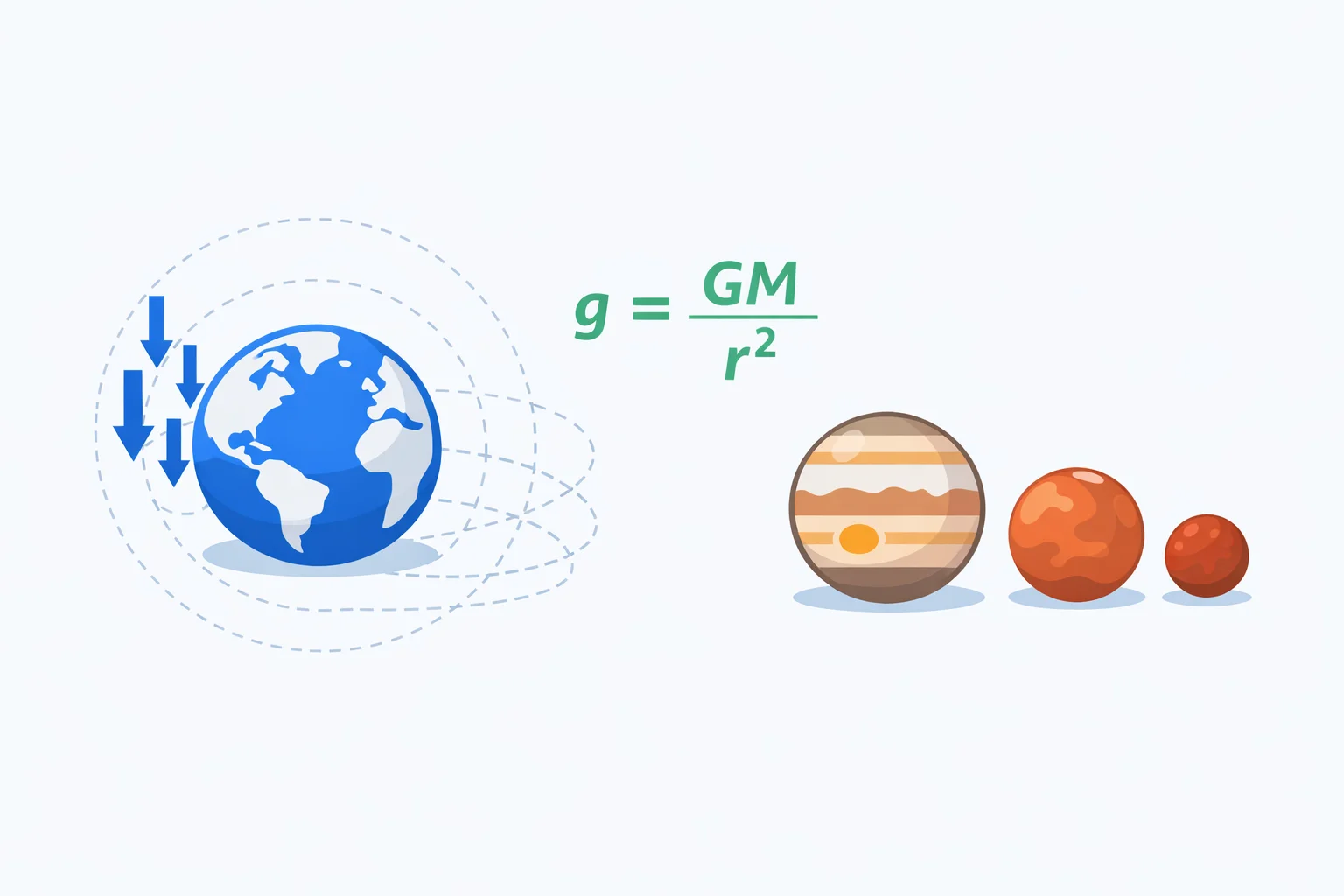
Gravitational Acceleration Calculator
Calculate gravitational acceleration with g = GM/r² from any planet's mass and radius. Compare surface gravity across the solar system and find g at altitude.
Use Calculator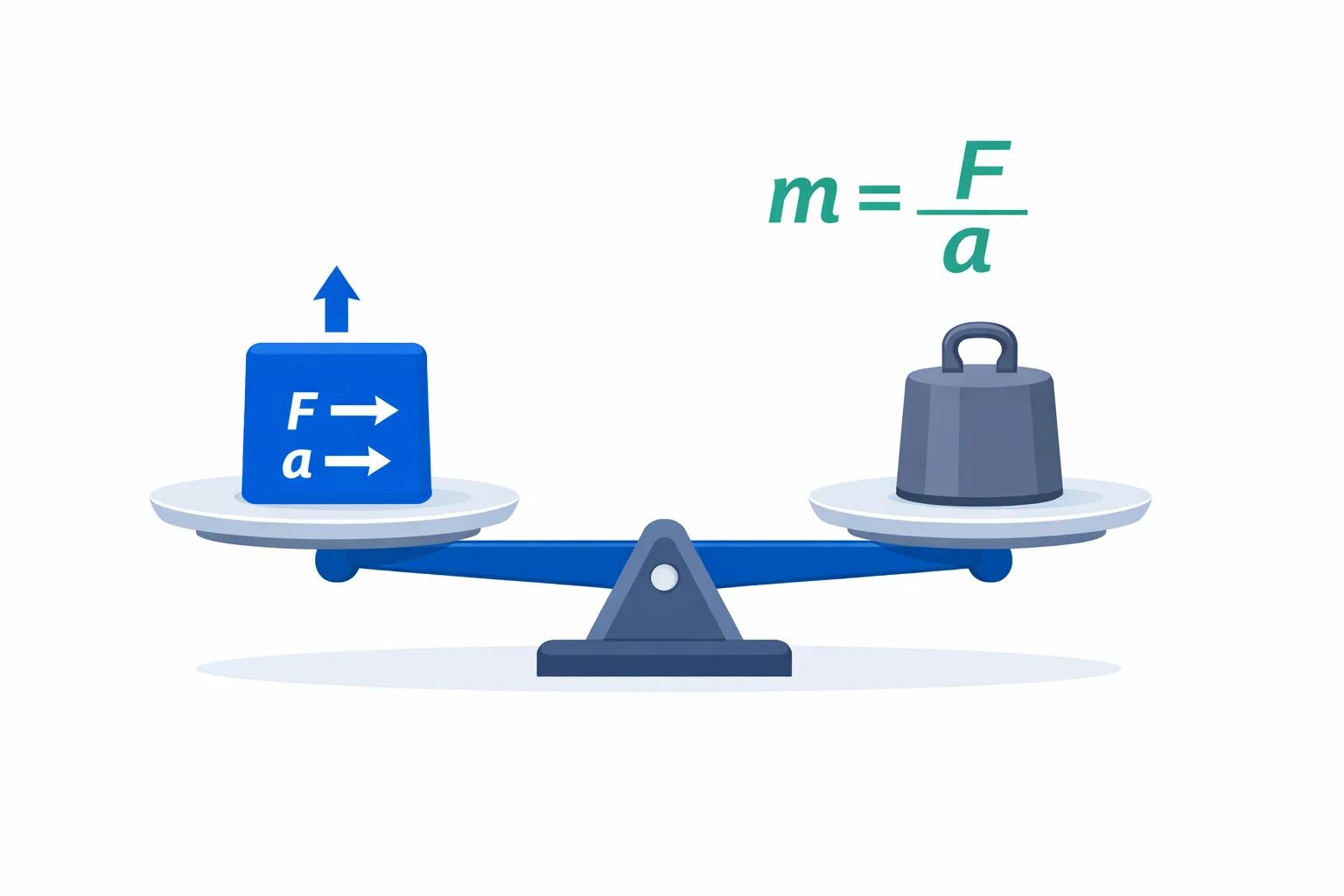
Mass Calculator
Calculate mass using m = F/a from Newton's Second Law. Find mass from force and acceleration, weight and gravity, or density and volume, with worked examples.
Use Calculator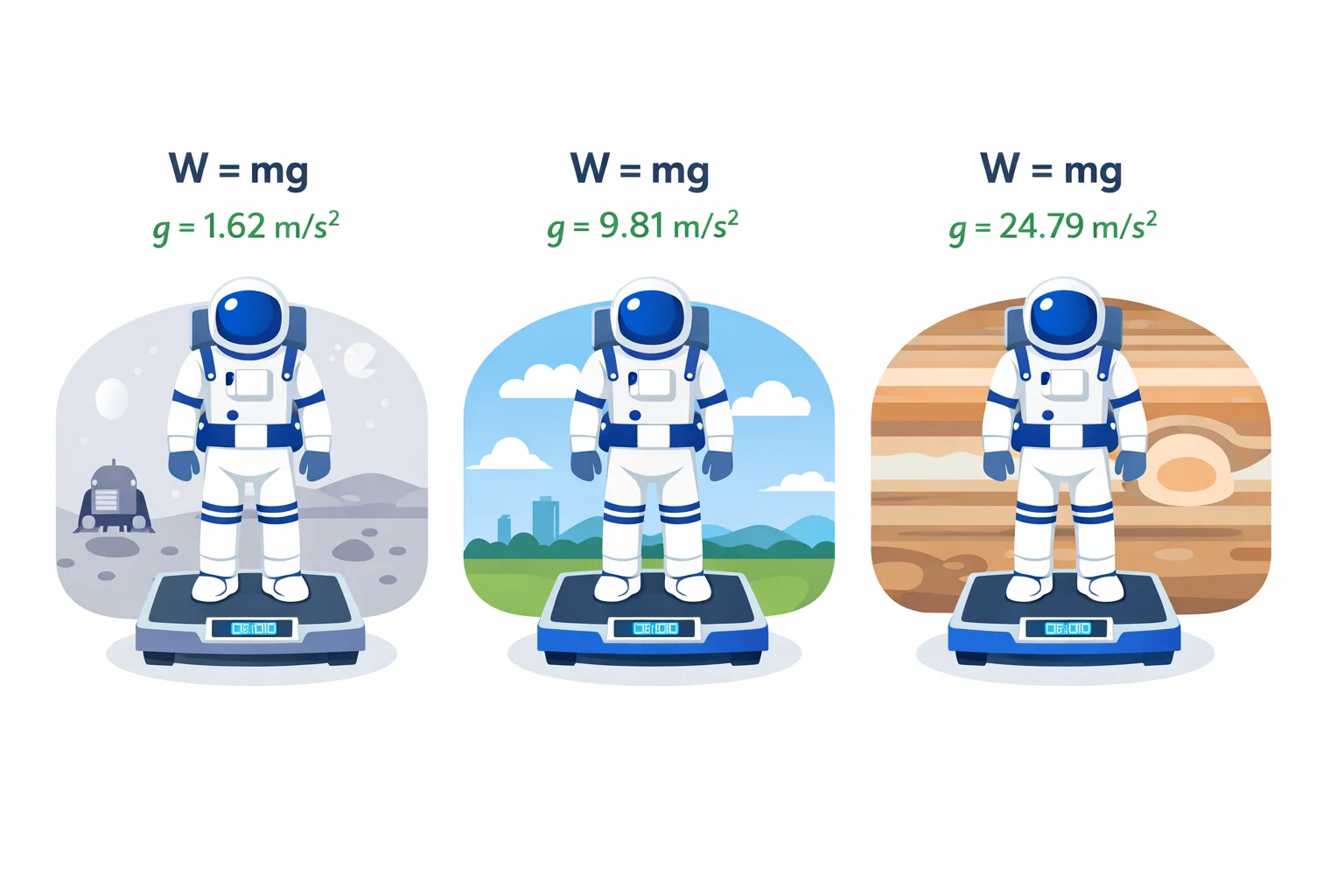
Weight Calculator
Calculate weight with W = mg. Find your weight on Earth, the Moon, Mars, or any planet from mass and gravity, with newtons, pounds, and kilograms-force.
Use CalculatorUnderstanding Mass, Weight & Gravity
Mass, weight, and gravity are among the most fundamental concepts in physics, yet they are frequently confused. Mass measures the quantity of matter in an object (in kilograms) and is an intrinsic property — it does not change with location. Weight is the gravitational force on that mass: W = mg, where g is the local gravitational acceleration. On Earth, a 5 kg object weighs 49 N, but the same object weighs only 8.15 N on the Moon.
Density connects mass and volume (ρ = m/V) and determines whether objects float or sink. Understanding gravitational acceleration on different celestial bodies — from Mercury's 3.7 m/s² to Jupiter's 24.8 m/s² — is essential for space science and engineering. Newton's law of universal gravitation (F = Gm<sub>1</sub>m<sub>2</sub>/r²) explains why g varies with altitude and planetary size.
These concepts underpin force & motion calculations through Newton's second law (F = ma), where mass determines how much an object resists acceleration. They also connect to fluid mechanics, where density differences drive buoyancy — the reason a steel ship floats despite steel being denser than water.