Fluid Mechanics Calculators — Buoyancy, Pressure & Bernoulli
Calculate buoyancy (Archimedes' principle), hydrostatic pressure, fluid flow rate, and solve Bernoulli's equation for pipes and open channels.
Fluid Mechanics Calculators
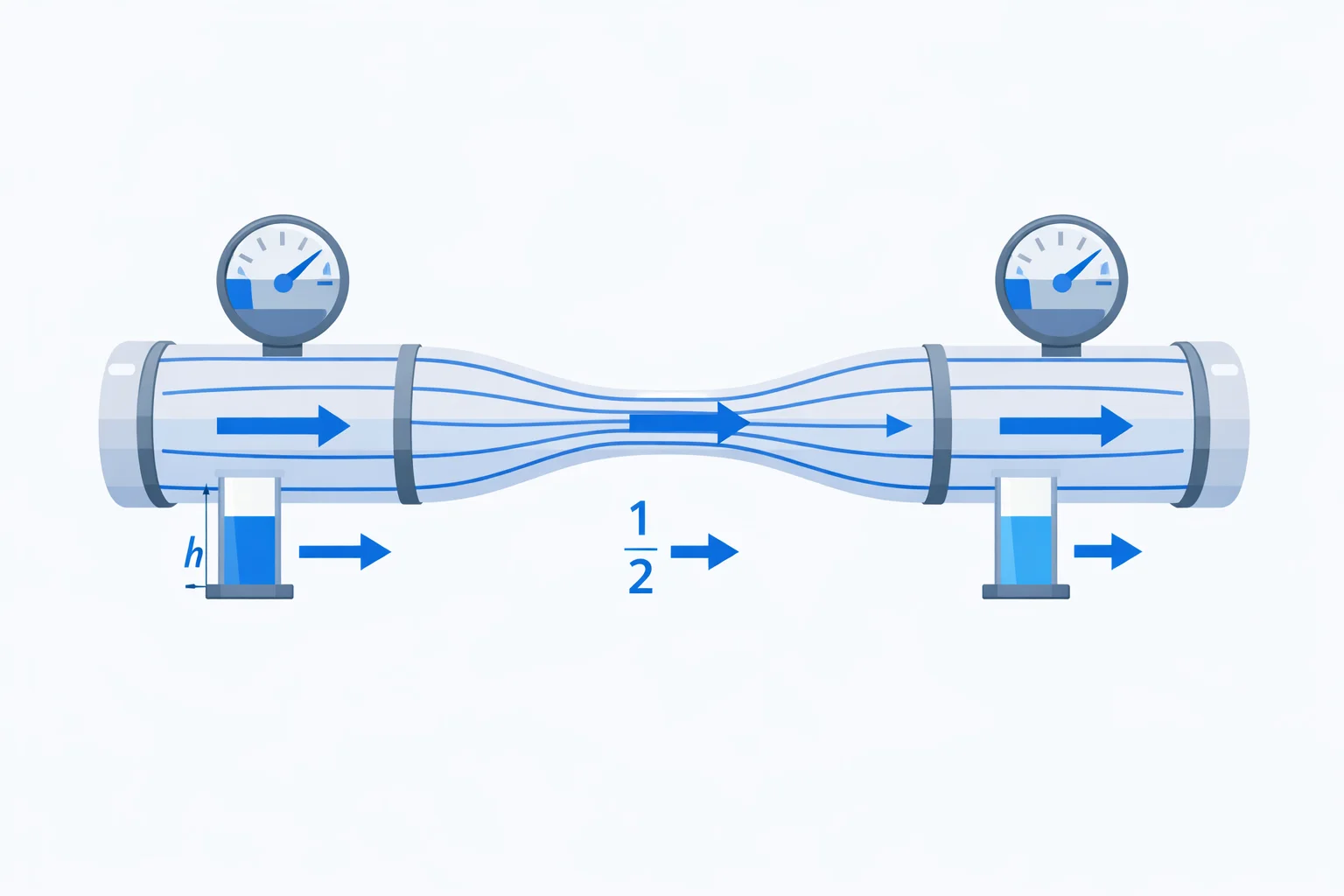
Bernoulli\u2019s Equation Calculator
Solve Bernoulli\u2019s equation for fluid flow problems. Calculate pressure, velocity, and height changes along a streamline in pipe systems.
Use Calculator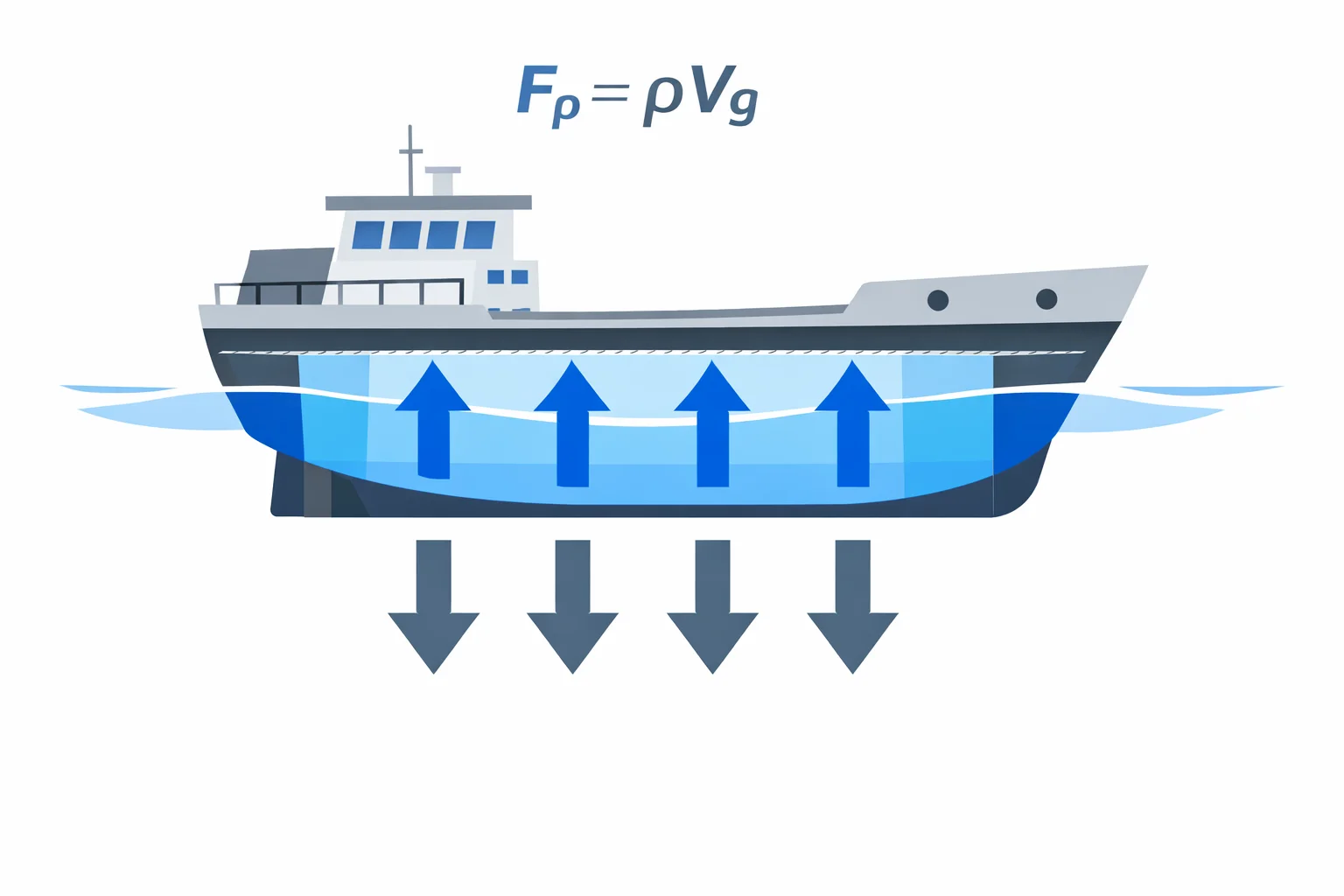
Buoyancy Calculator
Calculate buoyant force, displaced volume, and whether objects float or sink using Archimedes\u2019 principle. Includes fluid density presets and detailed results.
Use Calculator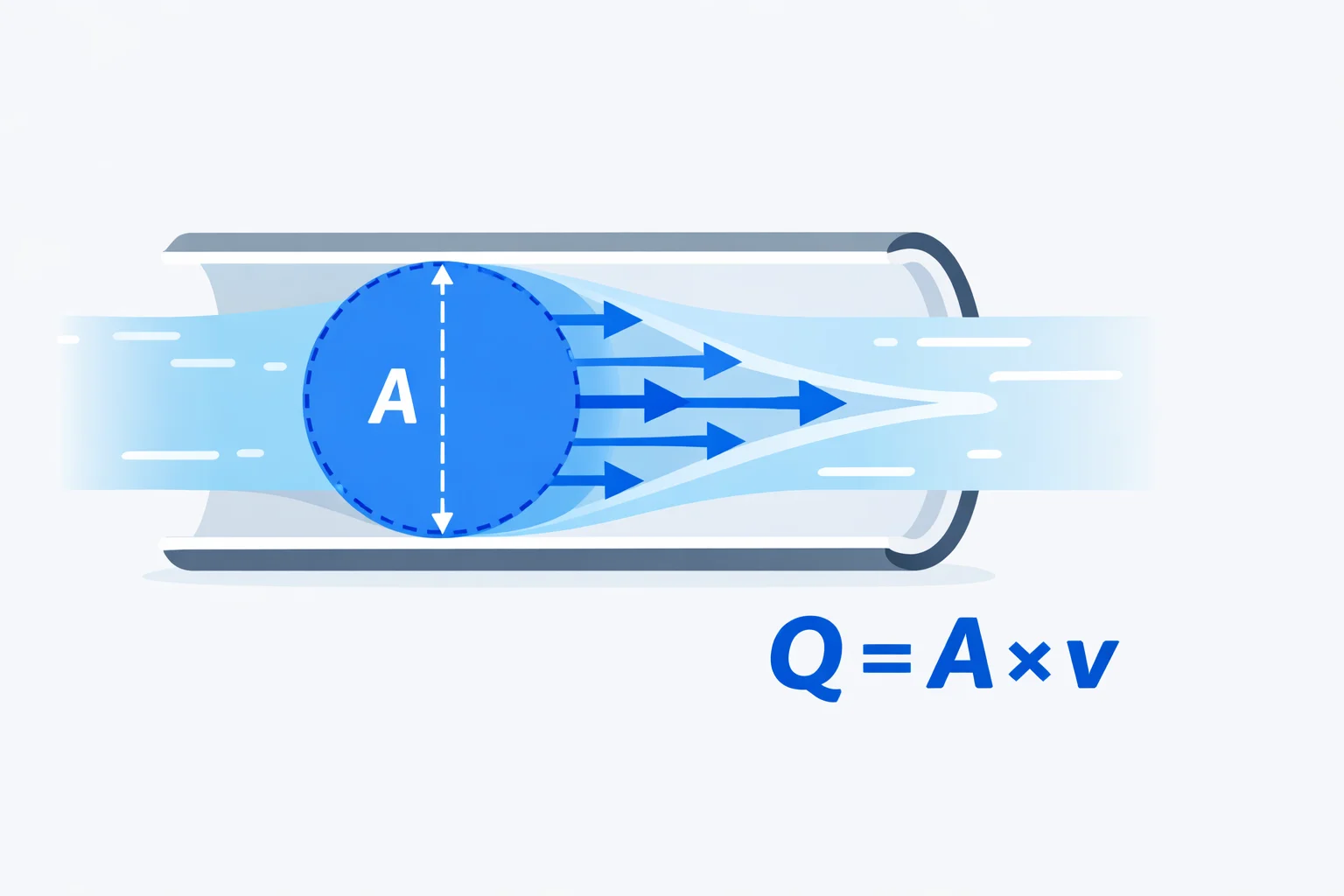
Flow Rate Calculator
Calculate volumetric and mass flow rate for pipes and channels. Enter cross-sectional area and fluid velocity to find Q = Av.
Use Calculator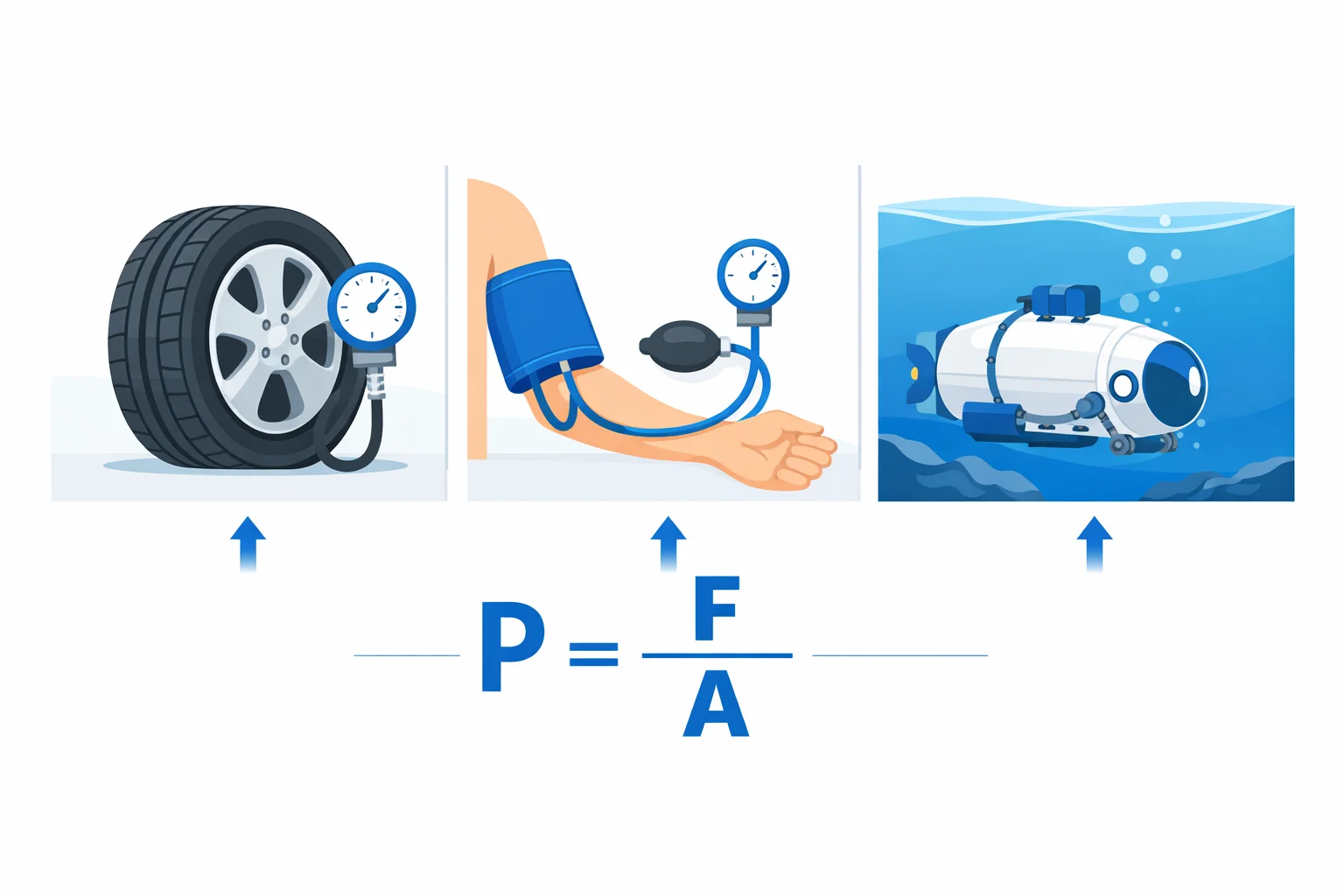
Pressure Calculator
Calculate pressure using P = F/A. Solve for pressure, force, or area with unit conversions between pascals, atm, psi, and bar.
Use CalculatorUnderstanding Fluid Mechanics
Fluid mechanics studies liquids and gases at rest (hydrostatics) and in motion (hydrodynamics). Pressure in a static fluid increases linearly with depth: P = P<sub>0</sub> + ρgh. At 10 m underwater, gauge pressure reaches about 1 atmosphere (98,000 Pa), which is why divers must equalize pressure in their ears. Archimedes' principle explains buoyancy — an object floats when the weight of displaced fluid equals the object's weight.
For moving fluids, Bernoulli's equation (P + ½ρv² + ρgh = constant) relates pressure, velocity, and elevation. Where fluid velocity increases, pressure decreases — the principle behind airplane lift, carburetors, and Venturi meters. The continuity equation (A<sub>1</sub>v<sub>1</sub> = A<sub>2</sub>v<sub>2</sub>) ensures mass is conserved: fluid speeds up through constrictions and slows in wider sections.
Fluid mechanics connects closely to thermodynamics, since temperature and pressure differences drive fluid flow in heating systems, weather, and engines. Density and buoyancy calculations also depend on mass, weight & gravity concepts, making these two categories natural companions.